Saturday, September 10, 2011

Hourglass by Myra McEntire

Hourglass by Myra McEntire


Ratings: PG-13; 3 1/2 stars


Summary: Emerson Cole sees ghosts. Sort of. Turns out they're actually rips—bits of the past washing through into the present. Which means that Emerson isn't nearly as crazy as she thought she was. How does she know all this? Her brother hired someone from the Hourglass agency to explain her powers to her. The problem? He's totally hot and nice, and totally off-limits. So now Emerson isn't crazy, she's just crazy in love. Oh, and she can time travel. Just what you need when you're 17 and still coping with the loss of your parents. Yup, totally normal. Not.


Opinions: This book is rather odd, for me. It's the first book I've read in a long time where I truly didn't know what I thought of it for the majority of the book. Certainly, the concept is intriguing and unique. I've read plenty of ghost stories, but none about “rips.” Time travel was definitely not something I saw coming. But at the same time, the writing was quite flawed, and the book seemed to give off distinctive Twilight vibes. And even on those last two points, I'm torn. A book does not have to be a magnificent literary achievement to be enjoyed, and as much hate as Twilight gets, people do enjoy it for the fluff that it is (they are just overshadowed by the twi-hards).


So yeah, I'm of mixed opinions on this book. Conceptually, it was great. The paranormal elements were different. The relationships between the characters, while certainly not unique, were not nearly as common as some. Example: the orphan angle is done a lot. The orphan-raised-by-adult-sibling-and-spouse angle is not common at all. In general, Hourglass is your run-of-the-mill paranormal romance.


However, my opinion on this book changed drastically at the very end. There were no less than three slap-you-in-the-face plot twists in the last twenty pages. These were so dramatic that I found my jaw dropping, and I wound up yelling at the book. They were also well-done enough as to fit in with the plot and characterization and not stand out awkwardly like “Hey! I'm a plot twist!” I'm sure none of that makes sense. In any case, I consider it to be a very positive quality when a book makes me react emotionally, and holding in tears while eating lunch in the school cafeteria is definitely an emotional response.


If only the last 20 pages of a book could make up for a rather mediocre beginning, this book would be at least a four. However, in my opinion, they can't. They did bring the overall rating of the book up from my original opinion of 3 stars, so yay for that. I rated Hourglass PG-13 to be on the safe side. There are a lot of rather frightening images/scenes/concepts (whatever you want to call it in a book). There are also some unintentional (I think) sexual innuendos. I don't remember much swearing, but again, that doesn't mean that there wasn't any.


Overall, if you want a fluffy, paranormal romance with mystery elements, this is a very good read. It's a little slow to pick up, and the characters can be rather bone-headed at times, but it really is an enjoyable book.


Note: My apologies if this review doesn't read well. I was a little off my game in writing it, but I do like my reactions to books to be genuine (thus written as close to the time I read the book as possible).

Saturday, September 3, 2011

And Then Things Fall Apart by Arlaina Tibensky

And Then Things Fall Apart by Arlaina Tibensky


Rating: R; 3 1/2 stars


Summary: Keek is going through the biggest change in her life: parents splitting up, massive fight with her boyfriend, best friend betraying her. And on top of it all, she has the chicken pox. And she's stuck at her grandmother's internet-free house while her mom is out of state with Keek's aunt, who just had a baby very prematurely. So yeah, Keek's life sucks. But you know what, she's determined to work through it. With the help of an ancient typewriter borrowed from her grandmother and the immortal words of Sylvia Plath, Keek will emerge from the summer as a stronger person.


Opinions: To start off, you know a book has a unique voice when you start to write the review in that voice. Often, as I'm reading, I start to “write” the review in my head. If it's convenient for me to start actually writing it down then, I do. Otherwise, it sits in my head for another time. So while reading this book, my head was filled with snippets from how I would review it, all done in Keek's snarky, fresh voice. I didn't even realize this at first, but then I realized that it was quite a feat: the voice was so different and memorable that I integrated it into my own writing without realizing it. Kudos to the author on voice.


As a note of warning, I don't typically read books in this genre (contemporary YA). In general, I prefer to read things set in times-that-were or worlds-that-aren't. That isn't to say I don't like contemporary YA; if I had time to read everything in the world, I would. I just generally reach for something else first. However, when I found out about this book, I immediately wanted it. This is mostly for three reasons. First, Keek is a writer. In my opinion, there are too few books about teen writers. This is a shame, since my guess is that the vast majority of teen writers are also teen readers. We're missing out on a valuable opportunity here! Second, Sylvia Plath is a pretty major part of the novel. I really like Plath's poetry. I'll admit that I haven't read it all, nor do I know individual pieces by title, but what I've read, I like. And she's not an element of much YA at all. Finally, I thought the premise behind this novel was really interesting. The entire novel takes place while Keek has the chicken pox and can do nothing but lie in bed with a typewriter on her lap. It's such a brilliant, self-contained idea with so much potential. And I'm happy to say that it really lived up to that potential.


The characters in this book were so unique and quirky and well-developed. Voice, again, is a huge part of this. But it certainly isn't the only part. Take, for example, Keek's grandma. I expected Keek's grandma to be a really bitter old lady—no technology and all, but she really, totally wasn't. Which is amazing, because the bitter old person stereotype is way too overdone. Instead, Keek's gram was a snarky, wise old lady. She weathered Keek's emotional storms with the non-judgmental finesse of someone who has been there before. She was probably one of my favorite characters in the book.


There were other quirks, too, that really drew me to the book. Keek has a habit of saying “sofa king” instead of “so f*****g,” which, in my opinion, is really clever. The first few times, I did wonder if it was a typo, but then it's explained in the context of the story, so it's all good.


I will say that this book has quite a bit of swearing (sofa kings included), and also some sexual content. That's why I rated it R. But please don't let that deter you; this really is an awesome book. It's not the best I've read, but for an end-of-summer book, it's perfectly fluffy, and not quite as light as it seems like it'll be. Keek learns some hard truths through the course of the novel.


In short, this is an awesome little book that should be read. It isn't for everyone, but neither is the fantasy that I typically read (and review).

Saturday, August 20, 2011

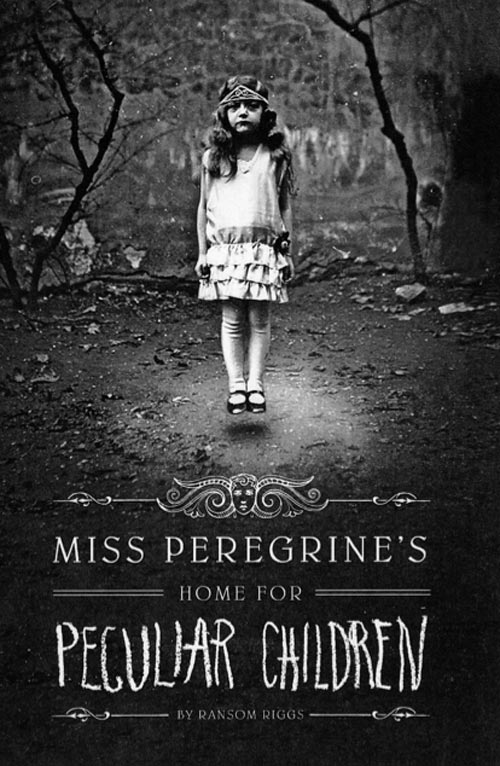
Miss Peregrine's Home for Peculiar Children


Rating: 2 stars; PG


Summary: Sixteen-year-old Jacob grew up on his grandfather's stories of an orphanage filled with children who weren't entirely normal: strongmen, invisible boys, a boy with bees in his stomach, a girl who ate with the back of her head. As he grew, the stories seemed less and less real, until, in the aftermath of his grandfather's death, Jacob finds out they're all too true.


Opinions: This book had a really rocky start for me. I was really about to stop reading it, because it just wasn't interesting. All the narrator does for the first few chapters is whine and complain. I was really disappointed, because conceptually, this book should be excellent. The idea of placing weird vintage photos into this paranormal, mystery-type book is a really good one. It's interesting and new. Unfortunately, it really just didn't live up to expectations. The first chunk of it was just boring, and I felt like the photos that were so important conceptually were just thrown in. Part of this may be because I read the ebook version, so there was no “two page spread” sort of thing, but still. The pictures almost felt unnecessary.


Granted, the book got better as it went on. After awhile I started to actually care about what was happening. But still, I did not like the narrator, and there was just something lacking about the writing. I felt like a lot of things were thrown in just to confuse the reader without being particularly relevant to the plot. It also seemed like a lot of things were too convenient, particularly the identity of the antagonist.


It was really hard for me to finish this book. I just wasn't all that interested in. I wasn't invested in the characters like I should have been. I found that I didn't really care what had happened. There was nothing really age-inappropriate, though some of the children and the monsters may frighten younger kids.


In short, if you are interested in the concept of this book, you can try reading it, but otherwise, it really isn't worth the time.

Friday, August 12, 2011

Touch of a Thief by Mia Marlowe


Rating: R; 3 1/2 stars


Summary: Lady Viola Preston is odd for a jewel thief on multiple counts. First, she's female, and titled at that! Second, when Viola touches a gem, she hears it speaking to her. If she lets herself, jewels draw her into visions of what has happened in their history. As interesting a gift as this is, it is also rather painful. After all, admitting to such a thing in Victorian England could find Viola committed.


Greydon Quinn's problems are more of a political nature. After spending time in India, he is trying to stop a dangerous rebellion from some unhappy Indians. His method? Locating a priceless jewel that was stolen from an Indian temple and returning it to its rightful resting place. Lucky for Quinn, he has Viola Preston by his side. Of course, no one said that trying to steal a gem like this was simple, and he hadn't counted on the Mayfair Jewel Thief to be female!


Opinions: I checked out this book because of the interesting premise. I knew that it was a romance novel, but I hoped (somewhat naively, I might add) that it wouldn't be an explicit romance novel. I was wrong, very wrong. This novel isn't as graphic as some, but it is definitely, well, steamy. That being said, it was the plot and characters that had me going through this book so quickly. I read close to half of it in one sitting, and finished the whole book in like 2 1/2 days.


The concept of being able to “hear” gems simply by touching them intrigued me. This isn't an ability that is common; I certainly haven't read another book that so much as mentioned it. Considering a great deal of what I read is fantasy (or at least, stories with fantastic elements), it is rare that I come across something that I really haven't seen before. This was one of those things. So concept is what brought me to the book, what got me to start reading. But, what kept me reading was definitely the plot and characters.


The plot had a sufficient amount of mystery to keep me guessing at what would happen. The mystery didn't overwhelm the definitely-romance feel of the book, but it did make me feel like I was reading more than just a love story, something with a little bit more meat. I also have to admit my love for/obsession with India was a key selling point for me. Although most of the novel did not take place in India, the entire work was touched with just a bit of India. And it was wonderful.


I also really liked the characters. I felt like they were well-developed; they all had their secrets and motivations. I also liked how all the characters played off each other, especially the main two, Viola and Quinn. Their dynamic was just really interesting, and it was fun to watch it develop. They had several misunderstandings, that I've come to understand are staples of romance, but not so many that it felt like a rom-com (I hate romantic comedies. My reaction to them is “Argh, why won't you just own up to your feelings and tell the truth!). For the most part, everything felt realistic to the time-frame. I mean, it's a romance, so certain...familiarities were played with much sooner than would happen in real life (I hope...), but nothing was so ridiculous that I was unable to suspend disbelief.


In general, this was a very light read (as romances often are). It's a perfect beach read, although now that summer is ending, maybe it's better suited for overstressed college students. :) This is definitely for an older crowd—there are definitely books out there that are more sexually explicit, but this is far more than YA-explicitness. Still, this is an enjoyable book for anyone that is partial to romances, historical fiction, or fantasy. In my opinion, those that read adult historical fiction and fantasy will see nothing out of the ordinary in the sexual content, but others may disagree.

Saturday, August 6, 2011

The Emerald Atlas by John Stephens

The Emerald Atlas by John Stephens


Rating: PG; 4 stars


Summary: The P siblings, Kate, Michael, and Emma, have been shunted from orphanage to orphanage for as long as they can remember, each one growing progressively worse. Kate knows they're not orphans, she remembers her mother telling her that she'd be back for them. But that doesn't stop everyone from calling them orphans. After the Edgar Allen Poe Home for Incorrigible Orphans, the P children wonder how any home could possibly be worse. But as it turns out, the quality of the food and beds is the least of their concerns. Upon arriving at their new home, the children discover a magical book and are promptly taken back in time. Although Kate and Emma find their way back with no problem, they soon realize that Michael was left behind. The two sisters journey back in time, hoping to save their brother and return to their own time. But there are many in the past who have different plans for the trio...


Opinions: The Emerald Atlas begins on an enchanting note. The first chapter, to me, was very reminiscent of the beginning of the Harry Potter series, and not in a copy-cat way. It just had the same magical spark. I'm predicting big things for this series. As a whole, the book reminded me of Harry Potter, Chronicles of Narnia, and A Series of Unfortunate Events, all excellent book series. The book was fast-paced, but still took its time on the details that can make a story like this really shine.


I thought that the P siblings were what really made this book wonderful. They are all uniquely their own person, but each had qualities that nearly any child could relate to: outward toughness with inward uncertainty, bookish, reluctant leader, etc. I found myself relating to Kate because she is the oldest, but also with Michael because of his academic leanings, and also to Emma because of her devotion and loyalty. I think that most readers will find something of themselves in each of the children.


I also felt that the worldbuilding was very well done. Everything fit, from the different races, to the magic system. The “nameless” characters of the townspeople were realistic. The villains and monsters were frightening. In short, this has everything that should make a series like this a big hit.


I gave this story 4 stars because although most of the time the familiarity and comparison to other books was welcome, there were times when I felt like I'd read this before. They were few and far between, but still, originality isn't appreciated today the way it should be (ahem, the 18 million vampire novels out there). The orphan angle has been done a lot, and there isn't much new to do by it. Other than that, this book was truly endearing to me. I rated it PG for some frightening moments. There isn't a lot of one-on-one violence (as opposed to a battle, where although many people may be hurt, you don't hear about it). There's no swearing that I can recall, and seeing as this is a middle-grade book, I'm sure I'd remember if there was some.


In short, this is an excellent book. I recommend it to anyone who likes Harry Potter, Lemony Snickett, or the Chronicles of Narnia. I'm waiting eagerly for the second installment of the series.

Sunday, July 31, 2011

Karma by Cathy Ostlere

Karma by Cathy Ostlere


Rating: PG-13; 5 stars


Summary: It is 1984, and Maya is on her way from her home in Canada to her parents' native India. She is traveling with her father to give Maya's mother a proper Sikh funeral. Once she arrives in India, however, everything changes. Prime Minister Indira Gandhi's Sikh body guards shoot and kill her, and now it seems the entire city is out for Sikh blood. Struggling to stay safe, Maya and her father are separated. Thus begins Maya's journey through a foreign land, where she will learn just how strong she really is.


Opinions: This book was a treasure. And I mean that in multiple ways. But, before I continue, I'm going to caution that I may very well be biased. I love verse novels to an extreme, and I'm also obsessed with India, due to the fact that I took Hindi classes a few years ago. There. Now that that's out of the way, I'll continue.


I had only a vague idea of what this book was about when I checked it out. I saw “verse novel” and “India” and immediately checked it out from the library. So, I was surprised to find out that the whole book wasn't about the assassination of Indira Gandhi. Sure, that influenced most of the book, but it actually wasn't as big as I thought it would be.


I found the format of the book to be utilized very well. Telling a story through a diary or journal is very easily cliched, even more so when the novel is written in verse as well. However, I found that it was used very skillfully here. There were many times that I forgot it was a diary altogether.


I also found that the shifting perspectives worked to the book's advantage. Too often having multiple points of view can be jarring or confusing to the reader, but this definitely worked. It was used with skill and it made sense in the context of the plot and the development of the characters.


I read close to half this book in one sitting because I was hooked so much. Granted, I read verse novels much quicker than prose novels, but this one still clocks in at over 500 pages. This book really draws in the reader. It is captivating and hard to put down. The setting is used richly, and I personally loved the Hindi thrown into the mix.


I gave this book 5 stars because I really did love it. I'd been experiencing a sort of reading slump until I got into this book and polished it off in about 2 days, which considering I work in the afternoon and evening, is kind of astonishing. I rated it PG-13 for violence and some implied sexual content. All the swearing I can recall is in Hindi, but that doesn't mean there isn't any English swearing. I just only remember the foreign cursing. There were several typos throughout the book, but these weren't enough to lower the book's rating.


This is an excellent book, although I don't think it is for everyone. It is a verse novel, which some people won't like, and it also relies heavily on the setting, so if reading about foreign lands isn't appealing, you probably won't like this book. However, I really enjoyed it, and I think that many people will too.

Saturday, July 23, 2011

Delirium by Lauren Oliver

Ok. So this post is a week late. I've been incredibly busy. And sick. And busy. I'll try harder to stay on schedule from now on. So anyway, here goes.

Delirium by Lauren Oliver


Rating: PG-13; 4 1/2 stars


Summary: Imagine a world cured of the most deadly disease in history. Now imagine this disease isn't cancer, AIDS, or any other known medical problem; this is disease is love, amor deliria nervosa. This is the world Lena Holoway lives in, the only world she has known. And she is looking forward to the cure, the medical procedure that will forever keep love from her body and mind. She has memorized the symptoms. She takes care of herself, for she doesn't want to end up like her mother: infected with the deliria to the point of suicide. Yes. Lena is excited for the cure. And then she falls in love, and nothing will be the same.


Opinions: This is my first dystopian read of the year, which is rather sad, as dystopian is one of my favorite genres. Delirium definitely didn't disappoint. So much in dystopian fiction is about concept, and this was definitely a good one: a world in which love is illegal and is treated and “cured” like a disease. That's some heavy-handed stuff. On top of that, Oliver's protagonist-narrator is complex and well-developed. And despite the dystopian setting, Lena thinks and acts just like a teenager. She is awkward, moody, and confused about herself and her upbringing. She just had this air of genuineness about her.


One of my favorite things about this novel is actually a pretty unimportant detail: I loved the melding of religion and science. The future that Lena lives in is filled with the combination of religion and science that, to us, would be weird, if not offensive. But to her, it's the only thing she's ever known, so it all makes perfect sense, even the poem for remembering the periodic table, which is recited as a prayer.


In a similar vein, the world building in this novel is just fantastic. Every detail included is convincing, and nothing necessary is left out. Each chapter is headed by an excerpt from some literature of this society; most chapters have propaganda or other government texts, but further into the book are examples of banned writing. I found this fascinating, wishing that Oliver would take the time to actually write some of these texts in full. I haven't really had this wish since I finished the Harry Potter series.


I also loved Lena's attitude towards her world and its rules. In a lot of similar books, the protagonist is either rebellious from the beginning, or at least curious about other ways of doing things. Lena is convinced that “the cure” is the only way. She is terrified of contracting deliria nervosa. As the novel progresses, she starts to think differently. But it isn't until almost the end that she reaches a conclusion that most readers will have had from the beginning (I won't spoil it).


I gave this book a PG-13 for language, violence, and some very light sexual content. There's not really too much that might be objectionable, though the f-bomb is dropped a few times. The violence is no worse than in a lot of classic literature, but there are definitely books lighter on violence. I gave it 4 1/2 stars for several reasons. I really enjoyed this book. That being said, there really wasn't anything that made it stand out as a 5 star book. I'm starting to think that I'm rating books too easily and I need to be more critical. So yeah, there was nothing to make this really stand out as a 5 star book. I was also disappointed to find out that this is part of a series. Based on recent experience, I'm starting to sigh when I find another dystopian series, not because I don't like series, but because I want to see a YA dystopian that can do it all in one book. I also really liked the ambiguity of the ending of Delirium, and the fact that it will probably be clarified in the next book is a little disappointing.


Rest assured that I will continue the series, though. This was a really good book. I read the last twenty pages or so while following my mom around in the grocery store, it was that unputdownable. I definitely recommend it to fans of dystopian fiction, and even for those who maybe don't read the genre as much. Once you accept the premise of the novel, it is very easy to get swept up in Lena's world (even if the romantic in me was weeping for much of the novel :P). This is a great book, and although I wish it was a standalone, I am looking forward to the next installment.