Showing posts with label PG. Show all posts

Sunday, April 6, 2014

Dragonwriter edited by Todd McCaffrey

Dragonwriter edited by Todd McCaffrey

When Anne McCaffrey passed in November 2011, it was not only those closest to her who mourned her death; legions of readers also felt the loss deeply. The pioneering science fiction author behind the Dragonriders of Pern® series crafted intricate stories, enthralling worlds, and strong heroines that profoundly impacted the science fiction community and genre.

In Dragonwriter, Anne’s son and Pern writer Todd McCaffrey collects memories and stories about the beloved author, along with insights into her writing and legacy, from those who knew her best. Nebula Award winner Elizabeth Moon relates the lessons she learned from Pern’s Lessa (and from Lessa’s creator); Hugo Award winner David Brin recalls Anne’s steadfast belief that the world to come will be better than the one before; legendary SFF artist Michael Whelan shares (and tells stories about) never-before-published Pern sketches from his archives; and more.

Join Anne’s co-writers, fellow science fiction authors, family, and friends in remembering her life, and exploring how her mind and pen shaped not only the Weyrs of Pern, but also the literary landscape as we know it. (blurb from Goodreads)

Rating: PG, 4 stars
Trigger warnings: none

As I mentioned in my review of Dragonsong, I am a huge Anne McCaffrey/Pern fan. I’d been looking for an excuse to move Dragonwriter to the top of my to-read list for awhile, and since I had to present on Dragonsong in one of my classes, I thought that was the perfect reason.

I have to say, this book isn’t quite what I’d expected. I’d been anticipating essays on the importance of Anne McCaffrey’s place in science fiction and analyses of how her world and writing work. What I found instead was much more personal, and it really made me appreciate Anne McCaffrey’s legacy more from a personal standpoint than a writing standpoint. I did end up learning quite a bit about the world that McCaffrey started writing in--a world where women didn’t really write science fiction (or at least where they weren’t recognized for writing science fiction). I learned that McCaffrey’s novel The White Dragon was the first hardcover sci-fi novel to make it onto the New York Times bestseller list, period. Not the first woman. The first author. Ever.

That sort of information provided important context for me. I started reading the Pern books in the early 2000s, while most of the famous ones were published in the 1970s. That’s a lot of time for things to change, both in the world in general, and in the writing and publishing worlds specifically. When I started reading Pern books, there were a plethora of other speculative novels on the market that featured strong female protagonists. By reading essays by women who saw themselves in science fiction for the first time in characters like Lessa and Menolly, I gained a new appreciation for the importance of the Pern novels.

I suppose my biggest disappointment with the book is that the essays barely touched on the Harper Hall Trilogy, which is one of my favorite parts of the series. Most discussion of female empowerment centered on Lessa, which makes sense as she is the protagonist for most of the series as a whole, but I was bothered by the unintentional slighting of Menolly, who I think is an invaluable character for people who come to Pern at a younger age. As a kid, Lessa intimidated me in ways that Menolly never did.

All in all, this book is a must-read for fans of the Pern books or McCaffrey’s other work. It would also be interesting for those who are interested in the history of the science fiction genre and how much one person’s legacy can impact that history.

Sunday, March 30, 2014

Dragonsong by Anne McCaffrey

Dragonsong by Anne McCaffrey

Every two hundred years or so, shimmering threads fall, raining black ruin on Fern. The great dragons of Fern hurl themselves through the beleaguered skies, flaming tongues of fire to destroy deadly Thread and save the planet. It was not Threadfall that made Menolly unhappy. It was her father who betrayed her ambition to be a Harper, who thwarted her love of music. Menolly had no choice but to run away. She came upon a group of fire lizards, wild relatives of the fire-breathing dragons. Her music swirled about them; she taught nine to sing, suddenly Menolly was no longer alone. (blurb from Goodreads)

Rating: PG, 4 stars
Trigger warnings: familial abuse

This definitely isn’t the first time I’ve read Dragonsong. The Pern books have been one of my favorite series since I was in middle school, and I’ve read Dragonsong many times. Re-reading it for class during this semester has only reminded me of my love for the series. Dragonsong has its flaws, but it is definitely a good book.

One thing that’s frustrating about Dragonsong is that it isn’t particularly friendly to people who are new to the Pern world. When I first read the book when I was in middle school, I wasn’t particularly bothered by being thrown into the world without explanation, but after re-reading the book for class, I definitely see how people who are unfamiliar with the world could be lost. Dragonsong was my first Pern novel, but generally I recommend starting with Dragonflight.

Re-reading this book, I was struck again by how well-written Anne McCaffrey’s characters are. They are developed to feel like real people, even in a book as short as Dragonsong (compared to other Pern books). Although my favorite character in the series, Masterharper Robinton, only makes a brief appearance, my love for him was reiterated just in those few pages.

Another thing that really struck me about Dragonsong during this re-read is how the women in the book (and in the series in general) really exhibit different kinds of strength. While I would argue that all of the women characters exhibit strength, not everyone is the no-nonsense leader that Lessa is. McCaffrey makes an excellent case for the inherent strength found in so-called maternal activities.

Overall, I would say that fans of Pern need to read Dragonsong, as well as the rest of the Harper Hall Trilogy. Those who are new to the series might be more advised to start with a different book, but then they should quickly move on to Dragonsong.

Sunday, March 23, 2014

Thrill of the Chaste by Valerie Weaver-Zercher

Thrill of the Chaste by Valerie Weaver-Zercher

Browse the inspirational fiction section of your local bookstore, and you will likely find cover after cover depicting virtuous young women cloaked in modest dresses and wearing a pensive or playful expression. They hover innocently above sun-drenched pastures or rustic country lanes, often with a horse-drawn buggy in the background—or the occasional brawny stranger. Romance novels with Amish protagonists, such as the best-selling trailblazer The Shunning by Beverly Lewis, are becoming increasingly popular with a largely evangelical female audience. Thrill of the Chaste is the first book to analyze this growing trend in romance fiction and to place it into the context of contemporary literature, religion, and popular culture.

Valerie Weaver-Zercher combines research and interviews with devoted readers, publishers, and authors to produce a lively and provocative examination of the Amish romance novel. She discusses strategies that literary agents and booksellers use to drive the genre’s popularity. By asking questions about authenticity, cultural appropriation, and commodification, Thrill of the Chaste also considers Amish fiction’s effects on Amish and non-Amish audiences alike. (blurb from Goodreads)

Rating: PG, 4 1/2 stars
Trigger warnings: none

As an Ohioan, Amish fiction is something I can’t avoid. I grew up about an hour away from Amish country, and so Amish novels were everywhere--stores, the library, even the occasional Amish-owned or Amish-style restaurant. While I’ve never actually read any Amish fiction, I have many Amish books on my to-read list, just because I think it’s an experience I should have at least once in my life. Anyway, when I saw that there was a book which analyzed the popularity of the genre, I knew that I had to read it, and Thrill of the Chaste didn’t disappoint.

I found this book absolutely fascinating. I never felt lost, despite my lack of first-hand experience with the genre and with the principles of evangelical Christian fiction. I really appreciated the author’s interviews with actual Amish people, and I found their varied perspectives of the presence of Amish fiction to be really interesting. I also found that I learned a lot about how varied Amish communities are, and the number of Amish people in the US is much larger than I had initially thought (a good thing, in my opinion).

Overall, I think this book is an excellent critical introduction to the phenomenon of Amish romance novels. Fans of the genre may find it a little too skeptical of the books for their taste, but those unfamiliar to the genre are likely to learn a lot of interesting information and may find it all fascinating enough to pick up an Amish romance for themselves. I would be really interested in seeing similar books for other new subgenres.

Sunday, February 16, 2014

God: A Story of Revelation by Deepak Chopra

God: A Story of Revelation by Deepak Chopra

In Deepak Chopra's powerful, groundbreaking, and imaginative new work, a unique blend of storytelling and teaching, the New York Times bestselling author explores the evolution of God. By capturing the lives of ten historical prophets, saints, mystics, and martyrs who are touched by a divine power, Chopra reveals a riveting portrait of a constantly changing God. Our belief—and therefore God itself—transforms with each passing century. In this new novel, Chopra brings to life the defining moments of our most influential sages, ultimately revealing universal lessons about the true nature of God.

Job in the Old Testament experienced something completely different from Paul in the New Testament, Socrates chased a mercurial spirit almost unrecognizable to the strange voice that called to Rumi, and Shankara moved from town to town sharing the truth about a God that stood in marked contrast to the one that guided Anne Hutchinson—yet one sees an undeniable pattern. These visionaries took the human race down unknown roads, and Chopra invites us to revisit their destinations. Tearing at our hearts and uplifting our souls, God leads us to a profound and life-altering understanding about the nature of belief, the power of faith, and the spirit that resides within us all. (blurb from Goodreads)

Ratings: PG, 4 stars
Trigger warnings: violence

This book was not at all what I expected, and I’m not even sure what, exactly, I was expecting. I suppose I was anticipating either a straight novelized narrative, or a nonfiction analysis of the mystics in this book. What I got was a strange mixture of both. Each chapter in this book starts out by narrating a scene or two from the mystic’s life. It starts off very specific--for example, the chapter on Anne Hutchinson starts with her seeing a beached whale with her children. After the specific scenes, the narrative continues on for a bit in a more general light. The second half of each chapter provides analysis about what that individual can tell us about God, both in general and in context of their life and historical era. I suppose, in a way, it was little bit like the gospel and homily part of Catholic mass--first you get the story, then you get the application of the story.

This unexpected formatting did make the book slow-going at first, but once I got into it, I really enjoyed the format. The chapter-by-chapter focused allowed Chopra to introduce the reader to a wide variety of mystics from a wide variety of religious traditions. Each individual that the book covered caught my interest, often for different reasons.

I know that Deepak Chopra has written other books in a similar vein to God, and I now look forward to reading them. God is an interesting read from both spiritual and historical perspectives, and if the format doesn’t bother you, I highly recommend it.

Sunday, December 8, 2013


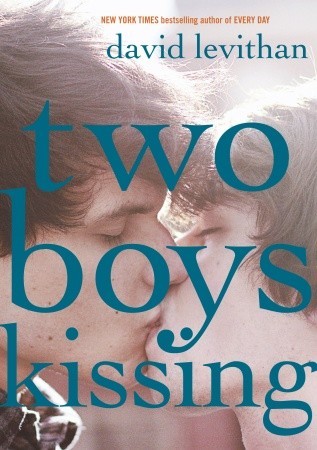
Two Boys KissingTwo Boys Kissing by David Levithan


New York Times  bestselling author David Levithan tells the based-on-true-events story of Harry and Craig, two 17-year-olds who are about to take part in a 32-hour marathon of kissing to set a new Guinness World Record—all of which is narrated by a Greek Chorus of the generation of gay men lost to AIDS. 

While the two increasingly dehydrated and sleep-deprived boys are locking lips, they become a focal point in the lives of other teen boys dealing with languishing long-term relationships, coming out, navigating gender identity, and falling deeper into the digital rabbit hole of gay hookup sites—all while the kissing former couple tries to figure out their own feelings for each other. (blurb from Goodreads)

Rating: PG, 5 stars
Trigger warnings: homophobia, AIDS, suicide attempt

This book. Oh, I have all the feelings for this book. Let’s start with the fact that I read this entire book in one sitting. In about two and a half hours. And I cried almost the entire time. Seriously, I started crying within the first five pages, and although I cry a lot when I read, it’s usually at the end of the book, not at the beginning.

The book starts out with the “Greek Chorus” of men who were lost to AIDS, written in a poetic and immediately-evocative style. Because I’m me and once I’m interested in a book, I don’t go back and read the blurb when I actually start to read the book, I didn’t realize that this was a sort of framing narrative for the novel. Although I’d assumed the entire book would be written in that fashion, I wasn’t disappointed when it shifted focus onto specific, living characters. All in all, I thought the writing struck that balance between plot-driven and poetic, catching the attention of both readers who appreciated every individual word and readers who focus on the bigger picture.

There were times that I found myself frustrated by the overwhelming focus on gay men, an already-dominant demographic in LGBTQ literature. However, I felt like this book was very clearly the story of gay men, and so the lack of bisexual and lesbian characters did not feel as harmful as it could have been. Two Boys Kissing doesn’t market itself as queer YA but as gay YA. Others may disagree with me, but even though the lack of other queer identities was frustrating, I was ultimately ok with it.

*SPOILER* I think part of why I loved this book so much is because it kept seeming like it would be a sad book, but everything ended on a positive, hopeful note. It’s so important to have books with gay characters who face a lot of the same problems other gay teens face without those problems being sugar-coated. By ending the book on a hopeful note instead of a “happily-ever-after” note, it felt both realistic and positive. *END SPOILER*

All in all, this was an excellent book. The writing is good, the characters are sympathetic, and it is gripping enough to make me read it in one sitting.

Wednesday, August 28, 2013

Wild, Weird, and Wonderful by F.W. Glasier

Wild, Weird, and Wonderful by F.W. Glasier

In both glory and grit, these remarkable photographs give us the American circus during the most vibrant period in its history, capturing both the intensity of the routines and the spirit of camaraderie of the performers. Glasier's work was unique in many ways, not the least of which was the offhand elegance he allowed his subjects, even the wonderful animals. His striking portraits make us recall the sober and revealing work of August Sander. (blurb from Goodreads)

Rating: PG, 4 stars
Trigger Warnings: racist/ableist language

There’s probably going to be an influx of circus-related books on the blog, as I’m writing an honors thesis about the circus this coming school year and have to do lots of research. I was really excited when I found this book, because it covers the time period I’m working with (turn-of-the-century) in photographs. It’s surprisingly hard to find old photos of the circus, particularly the kind of photos I want from the time period I want.

These photographs were all really cool, and the captions, when possible, gave a lot of details about the who, what, where, when, and why of each photograph. It was not at all a text-heavy book, but it’s a good companion to reference books and books like Queen of the Air, which I hope to read and review in the near future.

In the captions there is some language that could be considered racist or ableist. I appreciate the efforts to keep early 1900s circus jargon intact, but I did wonder sometimes about the manner in which that was done.

If you have any interest in circuses, or even turn-of-the-century Americana, this book is worth a look through. It won’t take too long, and the photographs really are a fascinating look at daily life for circus employees of that era.


Sunday, August 25, 2013

The Ocean at the End of the Lane by Neil Gaiman

The Ocean at the End of the Lane by Neil Gaiman

Sussex, England. A middle-aged man returns to his childhood home to attend a funeral. Although the house he lived in is long gone, he is drawn to the farm at the end of the road, where, when he was seven, he encountered a most remarkable girl, Lettie Hempstock, and her mother and grandmother. He hasn't thought of Lettie in decades, and yet as he sits by the pond (a pond that she'd claimed was an ocean) behind the ramshackle old farmhouse, the unremembered past comes flooding back. And it is a past too strange, too frightening, too dangerous to have happened to anyone, let alone a small boy.

Forty years earlier, a man committed suicide in a stolen car at this farm at the end of the road. Like a fuse on a firework, his death lit a touchpaper and resonated in unimaginable ways. The darkness was unleashed, something scary and thoroughly incomprehensible to a little boy. And Lettie—magical, comforting, wise beyond her years—promised to protect him, no matter what.

A groundbreaking work from a master, The Ocean at the End of the Lane is told with a rare understanding of all that makes us human, and shows the power of stories to reveal and shelter us from the darkness inside and out. It is a stirring, terrifying, and elegiac fable as delicate as a butterfly's wing and as menacing as a knife in the dark. (Blurb from Goodreads)

Rating: PG, 5 stars
Trigger warnings: death, nightmares, animal death

This book was amazing, and I hope I’m actually able to get my thoughts down in a coherent manner, because really my reaction is: dskdkdsfsldsfjkfdjfgjdsfjldskfddsfjksogood.

For starters, I loved the fact that we didn’t know the narrator’s name. This is a narrative technique that doesn’t always work, but here it did, partially because it just made me picture Neil Gaiman as the narrator, and he really worked as the narrator.

I loved the way the story unfolded, from the set up at the beginning, to the unfolding of past memories, to the surprising conclusion (a conclusion which I definitely will not be spoiling). The story’s structure left me surprised but not confused or left behind, which can be challenging to do.

I think the unnamed narrator is someone that many readers can relate to--he is an avid reader himself, and that influences so many of his decisions. Because most of the book takes place when he is a child, this characteristic felt realistic and not like a cop-out, which I think would have happened if the narrator, as an adult, was still referencing books all the time.

I loved Lettie and her family. I loved their toughness and their timelessness. I loved that we never really get clear answers about the Hempstocks and what they do, what they’re there for. I loved their farmhouse.

I even loved the shortness of the book (bear with me here). It’s not that I wanted the story to end, because I certainly didn’t, but there’s something romantic about short, powerful novels. And from my own experience, brevity is challenging. It’s easy to fill 400 pages, much harder to cut that down. Kudos to Gaiman for writing such a brilliant little book.

Ugh, this review feels so...lacking after my initial emotional reaction to The Ocean at the End of the Lane. Just read it. You won’t regret it.

Sunday, August 18, 2013

Mermaid in Chelsea Creek by Michelle Tea

Mermaid in Chelsea Creek by Michelle Tea

Everyone in the broken-down town of Chelsea, Massachusetts, has a story too worn to repeat—from the girls who play the pass-out game just to feel like they're somewhere else, to the packs of aimless teenage boys, to the old women from far away who left everything behind. But there’s one story they all still tell: the oldest and saddest but most hopeful story, the one about the girl who will be able to take their twisted world and straighten it out. The girl who will bring the magic.

Could Sophie Swankowski be that girl? With her tangled hair and grubby clothes, her weird habits and her visions of a filthy, swearing mermaid who comes to her when she’s unconscious, Sophie could be the one to uncover the power flowing beneath Chelsea’s potholed streets and sludge-filled rivers, and the one to fight the evil that flows there, too. Sophie might discover her destiny, and maybe even in time to save them all. (blurb from Goodreads)

Rating: PG, 4 1/2 stars
Trigger Warnings: OCD/Compulsions, alcoholism, animal death, neglectful parents, bullying

I’m not going to lie: this was a fairly dark book. It was gritty; it was dirty (and I don’t mean smutty; I mean there was a lot of dirt in the book). But for all of that, I found it surprisingly hopeful, and not just in the sense that it ended on a hopeful note. What I mean is that this book gave me hope for the future of humankind.

Despite the magical realism present in Mermaid in Chelsea Creek, I felt that Sophie’s destiny really resonated with a lot of things that are actually happening in the world today.  Sophie’s job is to, in a manner of speaking, rid the humanity of its darkness, of the sorrow and hatred and violence. Reading that, I thought of the bees that are dying from the use of pesticides and fungicides, America’s problem with gun violence, the violent revolutions currently taking place in South America and the Middle East. For some reason, the idea of an almost-high schooler taking the plunge to save us all despite her doubts and fears and the fact that she’s fighting her grandmother gives me hope for the future. Maybe it’s the fact that the solutions to these problems will likely come from today’s youth. Maybe I’m crazy. Maybe I should move on to a different point before I get super-political.

The first couple chapters of Mermaid in Chelsea Creek were a little slow, and I almost didn’t finish the book because of it. However, I’m definitely glad that I did, and the pacing does pick up a few chapters in.

I loved the references to the Polish language and culture. I come from a very Eastern-European family, and you really don’t see a lot of that heritage showing up in contemporary (or even historical) YA novels. It seems to me that whenever “heritage” is important to a character, it’s English, French, Irish, Italian, etc. (Taking a moment here to check my white privilege. Eastern Europeans may not show up as much in books as Western Europeans, but I know it’s more than those of non-European descent). I loved seeing phrases in Polish. I loved the shout-out to immigrant culture and the pain of losing language and culture.

While reading, I encountered phrases and passages that reminded me of Francesca Lia Block’s writing, which for me was great, because I love that writing style. It isn’t for everyone, but I can imagine that fans of Block or magical realism in general will have no problems with the writing style.

I’ll admit I was slightly disappointed to realize that this wasn’t a self-contained book. It’s not that I don’t want to read more, because I really do. I just get a little tired of so many YA series/trilogies/etc. Speaking as a writer, self-contained works are a greater challenge, at least for me, and I’m dying to see more in the market. But...you can bet your ass that I’m going to read the sequel when it comes out.

I put quite a few trigger warnings at the top of this review. Quick breakdown: Sophie’s best friend is a germaphobe who scrubs her skin raw when she feels dirty (this happens a lot due to the places in Chelsea that she and Sophie frequent). There is a character who is an alcoholic, although his page-time in the story is minimal. Several animals die towards the end of the book. Sophie’s mom, while she certainly isn’t abusive, is not particularly affectionate towards her daughter. In many instances this is noted by a lack of compassion and understanding coupled with neglect. There is a scene where Sophie confronts some boys who bully her. I can’t recall if there were any insinuations of a sexual nature, but I think there might have been (I already returned to the book to the library, so I can’t look it up. :/). Despite the numerous trigger warnings, I really do consider this book to be quite hopeful. I whole-heartedly recommend it, and I can’t wait for the next book.

Sunday, August 4, 2013

Hyrule Historia by Shigeru Miyamoto

The Legend of Zelda: Hyrule Historia by Shigeru Miyamoto

Dark Horse Books and Nintendo team up to bring you The Legend of Zelda: Hyrule Historia, containing an unparalleled collection of historical information on The Legend of Zelda franchise. This handsome hardcover contains never-before-seen concept art, the full history of Hyrule, the official chronology of the games, and much more! Starting with an insightful introduction by the legendary producer and video-game designer of Donkey Kong, Mario, and The Legend of Zelda, Shigeru Miyamoto, this book is crammed full of information about the storied history of Link's adventures from the creators themselves! As a bonus, The Legend of Zelda: Hyrule Historia includes an exclusive comic by the foremost creator of The Legend of Zelda manga - Akira Himekawa! (blurb from Goodreads)

Rating: PG, 3 stars
Trigger warnings: violence

Anyone who knows me knows that for as much as I love videogames, my love of Zelda trumps that by like 10 times. Or something like that. I love Zelda. About once a month I spend an afternoon or evening on Youtube searching for Zelda top tens and theories and stuff like that. This isn’t something scheduled...it just sort of happens...on a regular basis (I might be a little obsessed, ok?). So when I heard that Hyrule Historia was coming out, and that it had an official Zelda timeline, I knew I had to read it. I was even more excited when I found out that my local library had a copy (libraries are awesome, btw.)

I knew going into this book that the timeline alone was a good reason to get the book. I was absolutely not disappointed with that section of the book. I loved seeing how all the games fit together. As you might expect, that section does contain a lot of spoilers for all the games in the franchise, so skip it if you don’t want to be spoiled. It does only cover main events, though, so if you have yet to play a certain game, the timeline won’t reveal all the details. The timeline itself is incredibly detailed, with names of eras, which games take place in those eras, and little facts in the margins. Some details I really appreciated were about the Hylian text that shows up in several of the games.

The entire first section of the book dedicated to Skyward Sword. Which is...ok, I guess. I haven’t played Skyward Sword yet, and I understand that they put in so much information about it because it’s the newest games, but that’s the sort of information that I wanted on all the games. To me, Hyrule Historia is a lot like Harry Potter: Page to Screen, and so it would be like if that book had had an entire third of the book on just the 7th and 8th movies. Great information...but at a cost. Still, it was all really interesting and made me even more eager to get my hands on a copy of Skyward Sword.

The final section of the book is full of concept art. Again, I love it. I love the glimpse into the process. I love seeing the various Links and Zeldas in one place, to see how they changed over time. But, again, I wanted more equal coverage. I understand that for the earliest games there is probably less concept art because of the technological limitations, but there was a good ten pages of Twilight Princess art and half that for Ocarina of Time.

Overall, I loved the information presented in Hyrule Historia, and I loved the art and all of the little trivia tidbits. I wish there had been less of a focus on the most recent games in favor of something a little more equal. Ocarina of Time is my favorite Zelda game, and while the timeline covered it quite well, I really wanted more concept art and other information. I am interested in seeing if there is a new edition released after A Link Between Worlds comes out later this year.

This book is a must-read for any fans of Zelda, as well as for family and close friends who want to be able to talk Zelda with a gamer (hint hint, family)...Despite some disappointments, it really is worth the read.

Sunday, July 28, 2013

The Novice by Thich Nhat Hanh

The Novice by Thich Nhat Hanh

Bestselling author and Zen Master Thich Nhat Hanh transforms an ancient folktale into a timeless parable of a young woman who dares to risk her life for her faith.

Born to an aristocratic family in rural Vietnam, Kinh Tam’s uncommon beauty and intelligence were obvious to all she encountered. From an early age she was drawn to the teachings of Buddha and the rewards of a monastic life, but to please her family she agreed to walk the traditional path of marriage.

Throughout her marriage, Kinh Tam’s mind was devoted to her husband but her heart never waivered from her true calling. She wanted to be a monk. And yet Buddhism was still new to Vietnam and temples accepted only men for ordination. Making a decision that would forever change her life, Kinh Tam left town, disguised herself as a man, and joined a monastery as a novice.

Despite the many challenges of living as a man, Kinh Tam thrived and became a beloved member of the community. Years of profound joy and peace passed until a local woman accuses the novice of fathering her unborn child. Kinh Tam is torn between two impossible choices: keep her secret and endure brutal punishment or reveal the truth that would prove her innocence but put an end to her spiritual path.

Facing the unbearable with the boundless heart of Buddha, her choice forever changes her life, her country, and her faith.

In spare, elegant prose, Thich Nhat Hanh reminds us that we, too, face our own injustices and suffering, and by connecting with love, we can, like Kinh Tam, discover a mind and heart that are peaceful, happy, and free. (blurb from Goodreads)

Rating: PG, 4 stars
Trigger warnings: brief mentions of familial abuse (from in-laws)

I’ve read several of Thich Nhat Hanh’s books in my life. When I saw this novel in the bookstore at Plum Village Monastery, I was surprised, for I hadn’t known that he had written any fiction. As soon as I got back to the States, I reserved The Novice at my local library and eagerly waited for it to come in.

One of the many things I love about Thich Nhat Hanh is his writing style, something that I’ve recognized in every book of his that I’ve read, and The Novice is no different. At first, it was a little disconcerting, since this is a novel and not non-fiction like his other works. In fact, I almost stopped reading before I finished the first chapter. I’m really glad I kept reading, though, because the writing style and tone grew on me. The Novice was inspired by the life of a real Vietnamese Buddhist, and the book definitely stayed truth to the folk-legend roots, particularly in tone. I enjoyed the balance between conversational and detail-rich.

The story itself was interesting, but it was pretty much what the blurb describes; there weren’t a whole lot of twists and turns or subplots. This book is more in the telling, and in the Buddhist philosophies that Kinh Tam lived, which brings up another point: several times throughout the book, the narrative is interrupted to briefly explain certain Buddhist concepts. I’m somewhat familiar with these concepts, so I didn’t particularly like them, but others might appreciate their inclusion.

This is a book that really isn’t hiding much, and its simplicity is what makes it so wonderful. In some ways, it brings to mind the Christian parables that I’ve heard since I was little. The characters aren’t so simple that they’re flat, but I wouldn’t call them complex in the way that you normally well-written characters in novels. They’re more like fairy tale characters, almost allegories in themselves.

I thoroughly enjoyed this little book, despite my misgivings during the first chapter. If you don’t like Thich Nhat Hanh’s writing style, you probably won’t like this book, but it is an excellent read for those who already enjoy Thay’s writing.

Sunday, July 21, 2013

Wednesdays in the Tower by Jessica Day George

Wednesdays in the Tower by Jessica Day George

A castle that is constantly rearranging itself, and a young royal family sworn to protect it... Celie, Rolf, and their beloved Castle Glower are back in this exciting sequel.

Strange things are afoot in Castle Glower: new rooms, corridors, and even stables keep arriving, even when they aren't needed. Celie's brother Bran, the new Royal Wizard, has his hands full cataloguing an entire storeroom full of exotic and highly dangerous weapons, while Celie has her hands full . . . raising the creature that hatches from a giant egg she finds! Will they be able to find out what's making the Castle behave this way in time? (blurb from Goodreads)

Rating: PG, 5 stars
Trigger Warnings: none

Approximately a year and a half ago I review Tuesdays in the Castle and loved it. I had no idea there was a sequel, but boy am I glad. The second volume of the Castle Glower series loses none of the magic of the first book.

Wednesdays in the Tower continues the story of the lives of Princess Celie and her family, who live in Castle Glower, a castle which grows, shrinks, and rearranges itself, seemingly at random. Celie’s big accomplishment in this volume is a completed atlas of the castle.

One of the things I love about the Castle Glower books is the charm of Celie. She is a princess in a magical castle (and now she has a pet griffin), but at the end of the day she faces the same problems as other girls her age, namely being taken seriously by her family even though she is the youngest.

In general, I think the reason Wednesday in the Tower is as successful as Tuesdays in the Castle is because there is a winning combination of both concept and characters. Concept alone probably could have carried Tuesdays in the Castle, but fully-developed characters are needed to continue the series. Fortunately, Wednesdays in the Tower has no shortage of those. The characters all just felt so real, and that gave me so much enjoyment. They were interesting in their own right, not just because they lived in a shape-shifting house.

My sole complaint with the novel is not that it ends on a cliffhanger, but that the book isn’t out yet and won’t be for some time. I’ll definitely pick it up whenever it comes out.

Wednesdays in the Tower will appeal to fans of the previous book in the series, as well as those who like bright, spunky middle grade fantasy. Celie’s personality reminds me a bit of the earlier parts of Ella Enchanted (one of my all-time favorite books), although the Castle Glower books don’t deal with the same level of emotional maturity or internalized conflict. Instead, Celie and her family face external problems and solve them together in family-oriented ways.

Wednesday, July 3, 2013

Ash by Malinda Lo

Ash by Malinda Lo


In the wake of her father's death, Ash is left at the mercy of her cruel stepmother. Consumed with grief, her only joy comes by the light of the dying hearth fire, rereading the fairy tales her mother once told her. In her dreams, someday the fairies will steal her away, as they are said to do. When she meets the dark and dangerous fairy Sidhean, she believes that her wish may be granted.


The day that Ash meets Kaisa, the King's Huntress, her heart begins to change. Instead of chasing fairies, Ash learns to hunt with Kaisa. Though their friendship is as delicate as a new bloom, it reawakens Ash's capacity for love-and her desire to live. But Sidhean has already claimed Ash for his own, and she must make a choice between fairy tale dreams and true love.


Entrancing, empowering, and romantic, Ash is about the connection between life and love, and solitude and death, where transformation can come from even the deepest grief. (blurb from Goodreads)


Rating: PG, 4 stars
Trigger Warnings: some violence, familial/domestic abuse (à la Cinderella)


For the record, Cinderella retellings are my thing. My favorite books as a child include Ella Enchanted, Just Ella, and The Glass Slipper. I don’t know anyone else that has even heard of The Glass Slipper (please shout out if you have!). So when I found Ash on sale over a year ago, I was super pumped. A new Cinderella retelling! Unfortunately, I think it is misleading to bill Ash as a Cinderella retelling. I can definitely see parts of the story that were taken from Cinderella. Ash lives with her stepmother and stepsisters. She works like a servant for them and endures their ridicule and abuse. The prince holds a ball for every eligible maiden in the kingdom. That’s about the end of the Cinderella parallels, though. This isn’t necessarily a bad thing; to the contrary, I really enjoyed this book. I just think it shouldn’t have been marketed as a Cinderella retelling. Because that’s not what it is. More on exactly why it isn’t to come.


But if it’s not a Cinderella retelling, what did I like about it? So. Much. Ash felt so real, so human. Her emotions were so raw, which is something not often found in stories that take inspiration from Cinderella. It was really refreshing to see a fairy tale base made so human and genuine. I enjoyed the world-building. I felt the culture was well-integrated, and the role of the King’s Huntress made me really happy. So many fantasy worlds either stick with the status quo and have their military and influential figures male or equally male and female, and here was a martial position that was for women. I really enjoyed that.


I think one of Malinda Lo’s strong suits in writing is writing the gradual development of relationships. It’s something hard to do, and yet I think Lo captures it beautifully in Ash.


I also enjoyed her adaptation of common Cinderella elements. The use of the name Ash plays to both the novel’s Celtic influences and a synonym for cinders. I enjoyed her substitution of a fairy for the fairy godmother/tree/whatever.


Now for complaints. Er, complaint, since I already went over the not-fairy tale thing. I said I loved the world building, but there was one aspect that was frustratingly missing. *SPOILER?* When Ash starts to realize she has feelings for Kaisa, she is concerned about what people will think. Kaisa is clearly not concerned. Since Ash was a little sheltered from people, I assumed that she just didn’t understand the culture’s view of homosexuality, but I wanted a definitive answer on that. I wanted someone to say something or do something that revealed the general acceptance or lack thereof of homosexuality. This was a major frustration for me. *END SPOILER*


Now, for why this isn’t a fairy tale retelling to me. *SPOILER* For me, Cinderella stories are a lot about the prince. In the original tale and most retellings, he is the catalyst for change. He changes the Cinderella figure’s life, whether that is in a good way or not. In Ash, he’s basically a background character. This isn’t “the prince falls for Ash and she chooses the Huntress anyway.” This isn’t “the princess falls for Ash and she falls for the princess.” This isn’t even “the prince falls for Ash but she likes his sister.” No. The prince is there, but Ash dances with the Huntress and then her fairy boy gets pissed. To me, this departure from the how and the why of Cinderella is why Ash isn’t a fairy tale retelling. It is inspired by Cinderella, but no more than that. *END SPOILER*

All in all, I really enjoyed Ash. There were some moments of frustration, but they didn’t really cloud my enjoyment of the book. I thought the writing was beautiful and the characters well-developed. It’s definitely worth reading.

Sunday, April 1, 2012

Heaven is For Real by Todd Burpo

Heaven is for Real by Todd Burpo


Rating: PG; 3 stars


Summary: Heaven is For Real is the story of a little boy, Colton Burpo, who, after nearly dying in the hospital, started telling his parents things about God and heaven that a four-year-old shouldn't have known. Although at first his parents wrote him off as just telling stories, after several repeat incidences, they began to believe him. The book describes this journey starting from before the hospital and ending with how the family decided to deal with what seemed like a gift from God.


Opinions: I want to make it very clear that my opinions on this book do not stem from whether or not I believe Colton's account. I picked up this book because I curious as to how much I would find believable. After reading it, there were some things that I did believe, and some things that I didn't.


My disappointment with this book lie in the writing style. While I appreciate the need for Colton's father to write this story because of how young Colton was, I think that he occasionally lost sight of what the book was about. In particular, I thought there was too much focus on the father: his thoughts, feelings, and motives. I got the book expecting to read a story about Colton, and instead what I got was a story about how Todd dealt with Colton.


Now don't get me wrong, there are times when Todd's perspective really did improve the book. I really liked the parts about how both parents dealt with Colton talking about the holes in Jesus' hands, a grandfather he never met, and other things that were just unbelievable. These were moments that were really crucial to hear from the parents' perspectives. However, I felt that the parents' perspectives were used too much. I don't think that I need to know all of Todd's thoughts and emotions step-by-step when Colton is in the hospital. However, maybe I would think differently if I was a parent.


I think that in general, this book was misrepresented. I expected a story about a boy's cohesive narrative of heaven, and that's not what the majority of the book was about. However, I do think this is a worthwhile read if you like spiritual nonfiction. I don't think that you have to completely believe everything in it to enjoy it, however I do think it becomes more enjoyable if you keep an open mind while reading it. Because of the subject matter of the book, the Burpo family's religious ideals and interpretations are quite out in the open. It is quite likely that many readers don't see eye-to-eye with their views. I approached this book with an open curiosity, and that's the attitude that I recommend.


I gave this book 3 stars for writing style, perspective, and misrepresentation. However, I still did enjoy this book. I read almost all of it in one sitting. The tone makes it very easy to read. This isn't a book for everyone, but I think those with an open mind will definitely find some things to think about in reading it.

Sunday, February 5, 2012

The Secret Life of Pronouns by James W. Pennebaker

The Secret Life of Pronouns by James W. Pennebaker


Rating: PG; 4 stars


Summary: Function words, the little words that our eyes glaze over when we read, are more than they appear to be. In The Secret Life of Pronouns, author James Pennebaker reveals exactly what the title suggests: the hidden meanings and uses of words like pronouns that we use every day without even thinking. The book is divided into ten chapters, and although each discusses a different aspect of function words and psychology, there is, understandably, a lot of overlap. The book utilizes psychology and statistics to track how people use function words in various situations, and what that might reveal about their personality and motives.


Opinions: Overall, I really, really enjoyed this book. Then again, that shouldn't be surprising; I am an English and French double major who formerly considered going into linguistics. In short, I am a word nerd. I thought that this book provided some really interesting insights into the way language is used in culture today. I was absolutely fascinated by the examples pulled from fiction, perhaps because I am a creative writer.


I was a bit disappointed by the lack of definitive results in much of the research discussed in the book. Then again, in my experience with psychology, research is rarely definitive. I am glad that Pennebaker admitted to the gaps in the research and didn't try to cover them up or even lie about them. It makes the book (and him!) seem more credible and reliable.


I was a little frustrated with the overlap in topics of each of the chapters, but at the same time, I was also grateful for it. There was a lot of information being thrown at me, so the reminder was a good thing. I wish there was a way to keep the information fresh without having to rehash it all.


Still, despite my few complaints (or, in some cases, wishful thinking), I really did enjoy this book. The ideas it presented were really fascinating, and they were presented in a very engaging manner. Not once did I feel like I was reading a dry textbook, although someone who is not as interested by words as I am might disagree. By the time I finished the book, my sister was sick of hearing me talk about function words.


I have to say, it's interesting to write a review on a book about function words, because it really makes me wonder how I'm using function words in this review, and whether they are revealing anything about my personality...hmm...


I gave this book four stars because it really was enjoyable. I had a few complaints, but I still fully enjoyed the book. I gave it a PG simply because reading level. I really can't see anyone younger than high school reading this and understanding it in a meaningful way; some of the vocabulary related to statistics and psychology is a bit advanced, and there are some cultural references that children might not get. I just think that a kid would probably lose interest.


In general, I think that people who love words will enjoy this book. I also recommend it to writers, because it sheds some interesting light on writing fiction. This isn't a book for everyone; many people are bored reading about words. I, however, found it fascinating, and I'm sure I'm not the only one.