Showing posts with label 5 stars. Show all posts

Sunday, January 26, 2014

Blue is the Warmest Color by Julie Maroh

Blue is the Warmest Color by Julie Maroh

Originally published in French as Le bleu est une couleur chaude, Blue is the Warmest Color is a graphic novel about growing up, falling in love, and coming out. Clementine is a junior in high school who seems average enough: she has friends, family, and the romantic attention of the boys in her school. When her openly gay best friend takes her out on the town, she wanders into a lesbian bar where she encounters Emma: a punkish, confident girl with blue hair. Their attraction is instant and electric, and Clementine find herself in a relationship that will test her friends, parents, and her own ideas about herself and her identity.

First published in French by Belgium's Glénat, the book has won several awards, including the Audience Prize at the Angoulême International Comics Festival, Europe's largest. The film Blue Is the Warmest Color won the Palme d'Or at the 2013 Cannes Film Festival.

Julie Maroh is an author and illustrator originally from northern France. (blurb from Goodreads)

Rating: R; 5 stars
Trigger warnings: homophobia, romantic age difference

This book was an absolute beauty, and I am so excited to hear that it’s a movie, too. Not to sound cliché, but it is incredibly French--it differs from American comic books and graphic novels in the same ways that French films differ from American films. In fact, I really want to read it in the original language, because I suspect I’d like it even more in French.

I was a little weirded out at first by the age difference between Clementine and Emma. Clementine is still in high school, and Emma is very clearly an adult. Once they actually had a relationship and weren’t just meeting in a bar, the weirdness factor did go down a bit, but I imagine the age difference between them could be uncomfortable and/or triggering for some readers. Just a word of warning.

The art is beautiful in this book, very detailed, but not overdone. In many places, the dialogue is sparse, allowing the story to continue solely through the artwork. This is one of the ways in which I feel it parallels French film.

Without giving anything away, this isn’t exactly a happy book. I wouldn’t recommend reading it if you’re already sad, because you’ll probably finish it in one sitting, and then you’ll be sadder.

Another word of warning: this book does contain a few sex scenes, and because it’s a graphic novel, they’re, well, graphic. That is pretty much the sole reason I rated Blue is the Warmest Color as R.

Maturity aside, this really is an excellent book. The story is emotionally engaging, the characters are complex, and the art is breathtaking. I wholeheartedly recommend it. As for myself, I will be watching the movie as soon as I can get ahold of it.

Sunday, December 8, 2013


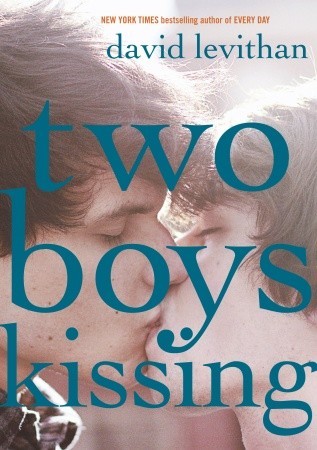
Two Boys KissingTwo Boys Kissing by David Levithan


New York Times  bestselling author David Levithan tells the based-on-true-events story of Harry and Craig, two 17-year-olds who are about to take part in a 32-hour marathon of kissing to set a new Guinness World Record—all of which is narrated by a Greek Chorus of the generation of gay men lost to AIDS. 

While the two increasingly dehydrated and sleep-deprived boys are locking lips, they become a focal point in the lives of other teen boys dealing with languishing long-term relationships, coming out, navigating gender identity, and falling deeper into the digital rabbit hole of gay hookup sites—all while the kissing former couple tries to figure out their own feelings for each other. (blurb from Goodreads)

Rating: PG, 5 stars
Trigger warnings: homophobia, AIDS, suicide attempt

This book. Oh, I have all the feelings for this book. Let’s start with the fact that I read this entire book in one sitting. In about two and a half hours. And I cried almost the entire time. Seriously, I started crying within the first five pages, and although I cry a lot when I read, it’s usually at the end of the book, not at the beginning.

The book starts out with the “Greek Chorus” of men who were lost to AIDS, written in a poetic and immediately-evocative style. Because I’m me and once I’m interested in a book, I don’t go back and read the blurb when I actually start to read the book, I didn’t realize that this was a sort of framing narrative for the novel. Although I’d assumed the entire book would be written in that fashion, I wasn’t disappointed when it shifted focus onto specific, living characters. All in all, I thought the writing struck that balance between plot-driven and poetic, catching the attention of both readers who appreciated every individual word and readers who focus on the bigger picture.

There were times that I found myself frustrated by the overwhelming focus on gay men, an already-dominant demographic in LGBTQ literature. However, I felt like this book was very clearly the story of gay men, and so the lack of bisexual and lesbian characters did not feel as harmful as it could have been. Two Boys Kissing doesn’t market itself as queer YA but as gay YA. Others may disagree with me, but even though the lack of other queer identities was frustrating, I was ultimately ok with it.

*SPOILER* I think part of why I loved this book so much is because it kept seeming like it would be a sad book, but everything ended on a positive, hopeful note. It’s so important to have books with gay characters who face a lot of the same problems other gay teens face without those problems being sugar-coated. By ending the book on a hopeful note instead of a “happily-ever-after” note, it felt both realistic and positive. *END SPOILER*

All in all, this was an excellent book. The writing is good, the characters are sympathetic, and it is gripping enough to make me read it in one sitting.

Wednesday, September 11, 2013

A Constellation of Vital Phenomena by Anthony Marra

A Constellation of Vital Phenomena by Anthony Marra

A story of the transcendent power of love in wartime, A Constellation of Vital Phenomena is a work of sweeping breadth, profound compassion, and lasting significance.

Two doctors risk everything to save the life of a hunted child in this majestic debut about love, loss, and the unexpected ties that bind us together. “On the morning after the Feds burned down her house and took her father, Havaa woke from dreams of sea anemones.” Havaa, eight years old, hides in the woods and watches the blaze until her neighbor, Akhmed, discovers her sitting in the snow. Akhmed knows getting involved means risking his life, and there is no safe place to hide a child in a village where informers will do anything for a loaf of bread, but for reasons of his own, he sneaks her through the forest to the one place he thinks she might be safe: an abandoned hospital where the sole remaining doctor, Sonja Rabina, treats the wounded. Though Sonja protests that her hospital is not an orphanage, Akhmed convinces her to keep Havaa for a trial, and over the course of five extraordinary days, Sonja’s world will shift on its axis and reveal the intricate pattern of connections that weaves together the pasts of these three unlikely companions and unexpectedly decides their fate. (blurb from Goodreads)

Rating: R, 5 stars
Trigger warnings: violence, torture, sexual assault, sex slavery

I’ve tried mentally writing this review several times, but I keep getting caught up in, “AAAAAH, it’s so beautiful.” Seriously, this novel captivated me with it’s writing, and with the way it wove everything together. I love novels that leave me actively wondering how everything is connected until, one by one, pieces start falling into place, and I am able to draw conclusions, not because the author is sloppy, but because it’s completely intentional. I love this book so very much.

I will admit, though, that for as much as I loved this book, there were moments I was confused. I’m not sure if this a weakness of the book or merely a moment where my education is lacking: I really felt like I was missing so much context for the situation in Chechnya. For the first few chapters, I kept double-checking the year the book was set, because I was so surprised that things in Chechnya were that bad in 2004 and I had never heard about it. Again, that could easily just be a problem with my education, but it was disconcerting to feel like I had no contextual background.

I really admire the way that Marra wove together so many threads from the lives of different characters into a whole tapestry. Throughout the first half of the novel, there were many times when I wondered where everything could possibly be going, and then miraculously it came together to paint a lovely and sad whole picture. Where I writing an analytical paper on this book, I might write paragraphs about how his well-rounded characters capture the human condition and reveal the ties between all of us. But since this is just a review, I’ll leave it at that.

I wish there was more I could form into cohesive thoughts, but I’m still too emotionally close to this book. If you can handle violence, including sexual violence, and have even the remotest interest in literary fiction, I urge you to read A Constellation of Vital Phenomena. It truly is a beautiful book.

Sunday, September 1, 2013

Letters from Skye by Jessica Brockmole

Letters from Skye by Jessica Brockmole

A sweeping story told in letters, spanning two continents and two world wars, Jessica Brockmole’s atmospheric debut novel captures the indelible ways that people fall in love, and celebrates the power of the written word to stir the heart.

March 1912: Twenty-four-year-old Elspeth Dunn, a published poet, has never seen the world beyond her home on Scotland’s remote Isle of Skye. So she is astonished when her first fan letter arrives, from a college student, David Graham, in far-away America. As the two strike up a correspondence—sharing their favorite books, wildest hopes, and deepest secrets—their exchanges blossom into friendship, and eventually into love. But as World War I engulfs Europe and David volunteers as an ambulance driver on the Western front, Elspeth can only wait for him on Skye, hoping he’ll survive.

June 1940: At the start of World War II, Elspeth’s daughter, Margaret, has fallen for a pilot in the Royal Air Force. Her mother warns her against seeking love in wartime, an admonition Margaret doesn’t understand. Then, after a bomb rocks Elspeth’s house, and letters that were hidden in a wall come raining down, Elspeth disappears. Only a single letter remains as a clue to Elspeth’s whereabouts. As Margaret sets out to discover where her mother has gone, she must also face the truth of what happened to her family long ago. (blurb from Goodreads)

Rating: PG-13, 5 stars
Trigger warnings: death, war, mentions of miscarriage and abortion

Oh this book, where to begin? I suppose I could start with the fact that about 20 or so pages from the end, I started crying and didn’t stop until well after I had finished. I didn’t anticipate this being a crying book (and I cry a lot when I read. Actually, I just cry a lot in general), and I’m still not completely sure why it emotionally impacted me so strongly, but I’m glad it did. I always consider it a form of praise if a book elicits a visible emotional reaction from the reader. Letters from Skye succeeded in that many times over.

As you might be able to guess from the title, Letters from Skye is a novel told entirely in letters. It certainly isn’t the first novel to do so, but it’s definitely the most well-done of the ones I’ve seen. This works so well in part because the voice is so genuine. Brockmole did an excellent job of writing characters with distinct and different voices. As an American, Davey uses different vocabulary from Elspeth, and since Margaret spent most of her life in Edinburgh, her letters have less of the Scottish highlands language than Elspeth’s do. The writing style took me straight into the time period, and the different letters took me from Chicago to Skye to London.

The period details worked especially well at not making the story overly sentimental. As a hopeless romantic, this book checked all the right boxes for me, and with its World War era atmosphere (the commonness of writing letters, the sense of urgency in relationships), I didn’t feel like any of it was over the top. This is a love story, so if romances aren’t your thing, this might not be a good choice for you. However, it isn’t sappy or overdone.

I think my biggest disappointment with Letters from Skye is that it isn’t a true story. The language was so real, and the characters felt so alive, that there were times when I almost convinced myself it was true, that Brockmole merely found a trunk of letters somewhere and compiled them into a book. In addition, there was one letter that I thought was borderline unrealistic. By the end of the letter, I though the details included were justified, but it still seemed a little like maid-and-butler talk. That’s only one letter out of a whole book, though--hardly worth noting.

Fans of historical fiction and romance novels are likely to enjoy Letters from Skye, and do to the skillful writing, I also recommend it to those who favor literary fiction. Or everyone. That works, too.

PS--A big heck yeah to all the reviewers who wrote their reviews as a letter. I wanted to, but I’m very particular about keeping my format. :P

Sunday, August 25, 2013

The Ocean at the End of the Lane by Neil Gaiman

The Ocean at the End of the Lane by Neil Gaiman

Sussex, England. A middle-aged man returns to his childhood home to attend a funeral. Although the house he lived in is long gone, he is drawn to the farm at the end of the road, where, when he was seven, he encountered a most remarkable girl, Lettie Hempstock, and her mother and grandmother. He hasn't thought of Lettie in decades, and yet as he sits by the pond (a pond that she'd claimed was an ocean) behind the ramshackle old farmhouse, the unremembered past comes flooding back. And it is a past too strange, too frightening, too dangerous to have happened to anyone, let alone a small boy.

Forty years earlier, a man committed suicide in a stolen car at this farm at the end of the road. Like a fuse on a firework, his death lit a touchpaper and resonated in unimaginable ways. The darkness was unleashed, something scary and thoroughly incomprehensible to a little boy. And Lettie—magical, comforting, wise beyond her years—promised to protect him, no matter what.

A groundbreaking work from a master, The Ocean at the End of the Lane is told with a rare understanding of all that makes us human, and shows the power of stories to reveal and shelter us from the darkness inside and out. It is a stirring, terrifying, and elegiac fable as delicate as a butterfly's wing and as menacing as a knife in the dark. (Blurb from Goodreads)

Rating: PG, 5 stars
Trigger warnings: death, nightmares, animal death

This book was amazing, and I hope I’m actually able to get my thoughts down in a coherent manner, because really my reaction is: dskdkdsfsldsfjkfdjfgjdsfjldskfddsfjksogood.

For starters, I loved the fact that we didn’t know the narrator’s name. This is a narrative technique that doesn’t always work, but here it did, partially because it just made me picture Neil Gaiman as the narrator, and he really worked as the narrator.

I loved the way the story unfolded, from the set up at the beginning, to the unfolding of past memories, to the surprising conclusion (a conclusion which I definitely will not be spoiling). The story’s structure left me surprised but not confused or left behind, which can be challenging to do.

I think the unnamed narrator is someone that many readers can relate to--he is an avid reader himself, and that influences so many of his decisions. Because most of the book takes place when he is a child, this characteristic felt realistic and not like a cop-out, which I think would have happened if the narrator, as an adult, was still referencing books all the time.

I loved Lettie and her family. I loved their toughness and their timelessness. I loved that we never really get clear answers about the Hempstocks and what they do, what they’re there for. I loved their farmhouse.

I even loved the shortness of the book (bear with me here). It’s not that I wanted the story to end, because I certainly didn’t, but there’s something romantic about short, powerful novels. And from my own experience, brevity is challenging. It’s easy to fill 400 pages, much harder to cut that down. Kudos to Gaiman for writing such a brilliant little book.

Ugh, this review feels so...lacking after my initial emotional reaction to The Ocean at the End of the Lane. Just read it. You won’t regret it.

Sunday, July 21, 2013

Wednesdays in the Tower by Jessica Day George

Wednesdays in the Tower by Jessica Day George

A castle that is constantly rearranging itself, and a young royal family sworn to protect it... Celie, Rolf, and their beloved Castle Glower are back in this exciting sequel.

Strange things are afoot in Castle Glower: new rooms, corridors, and even stables keep arriving, even when they aren't needed. Celie's brother Bran, the new Royal Wizard, has his hands full cataloguing an entire storeroom full of exotic and highly dangerous weapons, while Celie has her hands full . . . raising the creature that hatches from a giant egg she finds! Will they be able to find out what's making the Castle behave this way in time? (blurb from Goodreads)

Rating: PG, 5 stars
Trigger Warnings: none

Approximately a year and a half ago I review Tuesdays in the Castle and loved it. I had no idea there was a sequel, but boy am I glad. The second volume of the Castle Glower series loses none of the magic of the first book.

Wednesdays in the Tower continues the story of the lives of Princess Celie and her family, who live in Castle Glower, a castle which grows, shrinks, and rearranges itself, seemingly at random. Celie’s big accomplishment in this volume is a completed atlas of the castle.

One of the things I love about the Castle Glower books is the charm of Celie. She is a princess in a magical castle (and now she has a pet griffin), but at the end of the day she faces the same problems as other girls her age, namely being taken seriously by her family even though she is the youngest.

In general, I think the reason Wednesday in the Tower is as successful as Tuesdays in the Castle is because there is a winning combination of both concept and characters. Concept alone probably could have carried Tuesdays in the Castle, but fully-developed characters are needed to continue the series. Fortunately, Wednesdays in the Tower has no shortage of those. The characters all just felt so real, and that gave me so much enjoyment. They were interesting in their own right, not just because they lived in a shape-shifting house.

My sole complaint with the novel is not that it ends on a cliffhanger, but that the book isn’t out yet and won’t be for some time. I’ll definitely pick it up whenever it comes out.

Wednesdays in the Tower will appeal to fans of the previous book in the series, as well as those who like bright, spunky middle grade fantasy. Celie’s personality reminds me a bit of the earlier parts of Ella Enchanted (one of my all-time favorite books), although the Castle Glower books don’t deal with the same level of emotional maturity or internalized conflict. Instead, Celie and her family face external problems and solve them together in family-oriented ways.

Wednesday, July 17, 2013

Teeth by Hannah Moskowitz

Teeth by Hannah Moskowitz


Be careful what you believe in.


Rudy’s life is flipped upside-down when his family moves to a remote island in a last attempt to save his sick younger brother. With nothing to do but worry, Rudy sinks deeper and deeper into loneliness and lies awake at night listening to the screams of the ocean beneath his family’s rickety house.


Then he meets Diana, who makes him wonder what he even knows about love, and Teeth, who makes him question what he knows about anything. Rudy can’t remember the last time he felt so connected to someone, but being friends with Teeth is more than a little bit complicated. He soon learns that Teeth has terrible secrets. Violent secrets. Secrets that will force Rudy to choose between his own happiness and his brother’s life. (blurb from Goodreads)


Rating: R, 5 stars
Trigger warnings: bestiality, violence, sexual assault


This book got a lot of buzz on the YA blogs I follow because it featured both gay teens and mermaids (er, fishboys), and in particular the gay teen loved the fishboy. That buzz really interested me both because mermaid books are usually about the, uh, maids, and because the speculative novels I’ve read with LGBTQ teens more often have gay-identified girls. Contemporary YA has far more gay boys than girls, but speculative fiction seems to be the opposite. Basically, buzz=color me curious.


I have to say, I think a lot of the buzz about Teeth was really misleading in everything from Rudy’s sexuality to the extent of his relationship with Teeth, but I am totally ok with that. In fact, I like what the book was so much more than what the buzz had me thinking it would be. I applaud Moskowitz for writing a book about exploring sexuality that isn’t a coming out story. From the beginning of the book, we hear a lot about how Rudy was quite the ladies’ man before moving to the island. He’s comfortable with having sex without being a braggart (which in itself was refreshing). There are no mentions of romantic or sexual relationships with dudes. And yet, by the time Rudy realizes that he has romantic feelings for Teeth, he doesn’t freak out because Teeth is male. He doesn’t even freak out because Teeth is part fish. There’s no lonely walks filled with angsting about how attracted he is to Fish Boy. Rudy is, quite simply, focused on the more complicated aspects of their relationship, like the fact that his brother is only alive because he is eating the fish that Teeth loves. For that matter, Rudy’s feelings for Teeth were subtle enough that had I not known the buzz beforehand (and had I skimmed the book’s blurb), I might not have picked up on the romantic tension at all.


Basically, it was incredibly refreshing to see a YA novel with a gay protagonist that was so much more than a YA novel about a gay protagonist. Rudy is a complicated character with a complicated romantic and sexual life, but at the end of the day that isn’t all he is. So much in Teeth was handled subtly, from sexuality to assault. The relationships between the characters were rich and complex, which made this book so much more than what I’d heard about it.


Trigger-wise, the bestiality is from a flashback, and it deals with Teeth’s conception, not Teeth. I only put that warning in because only one party in that scene had the capacity to consent. There are a lot of mentions of sexual assault, but Rudy never sees any of them up close. The descriptions of violence do get pretty intense at times, especially at the end, but not nearly as intense as in Dualed, the last violent novel I reviewed.

Teeth is an dark, complex novel that will appeal to sci-fi fantasy lovers, those seeking LGBTQ romance (although they *might* be slightly disappointed by amount of romantic details), as well as those who like gritty contemporary novels--Rudy seemed a lot like a contemporary character who accidentally wandered into a speculative setting. Teeth is an excellent book, and if you pass on it, you’re missing out.

Friday, May 25, 2012

Bitterblue by Kristin Cashore


Bitterblue by Kristin Cashore

Rating: PG-13; 5 stars

Summary: Bitterblue is a sequel to Graceling and a companion to Fire. Taking place eight years after Graceling, the story follows Queen Bitterblue in her journey to help her country recover after Leck's reign. The book is filled with political intrigue, romance, science, war, and much more. Although the book focuses on Bitterblue, familiar characters, such as Katsa, Po, and Fire, do make an appearance. The book is both a companion and a sequel in the truest sense: it directly continues events set forth in Graceling, and characters and events from Fire do return in a significant way. The book follows both the progress of the country of Monsea and development of individual characters.

Opinions: The first year that I started this blog, I named Graceling my top book for the year. Later, I raved about Fire. However, it is only with Bitterblue that I am fully appreciating what Cashore has managed to do with the written word. Now don't get me wrong, I'm not saying Cashore is the next Dickens or Twaine. I'm not going to speak to that. Her first book is less than ten years old.

However, I think that what Cashore is writing is incredibly relevant today. Bitterblue alone discussed issues of homosexuality, parental pressure, self-injury, birth control, and pre-marital sex. And you know what? None of these were the focus of the story. While I'm all for the importance of books like Baby Be-Bop, by Francesca Lia Block, and Wintergirls, by Laurie Halse Anderson, I have to say that sometimes it's refreshing to read a book that opens and encourages a dialogue on these topics without making them the focus of the entire novel.

Besides these social issues that were present without being the focus, the novel did focus on issues of abuse and brainwashing. Cashore handles all issues deftly and sensitively. I think the choice of Queen Bitterblue as the protagonist works to the story's advantage: she discovers things along with the reader, which allows Cashore to really delve into the issues she is opening up a discourse on.

Before a friend of mine kindly loaned me her advanced copy of Bitterblue (thank you, Emily!), I read some reviews on Goodreads in anticipation of this book. I have to say, I was really upset by the amount of people who gave the book negative reviews because of the lack of focus on marriage. As much as I'm a romantic and enjoy a good happily-ever-after, the world isn't about marriage, and I think it's important that books show that there are other options. I won't say more on the matter, so as not to spoil anyone, but I was frustrated enough by these reviews to include it in mine.

I can't really say enough how much I enjoyed this book. Consistent with her two other books, Cashore manages to weave together many subtle themes and subplots into Bitterblue. To me, Bitterblue is part political novel, part psychological mystery, part mystery, part adventure, and all wonderful.

I'd recommend this book to any fans of Cashore's previous books, as well as anyone who enjoys high fantasy, and even historical fiction. The amount of psychology and politics in Bitterblue do make it rather similar to some historical fiction I've read. There is some violence and sexuality in this book, though I wouldn't call any of it explicit. There are also scenes which may be triggering to some people. In particular, I am thinking of scenes recounting abuse of both adults and children. Just a warning to folks. I enjoyed every page of this book, even when it frustrated me. It's definitely a worthwhile read, and it'll make a great summer read, too.

Monday, April 23, 2012

My Name is Mina by David Almond


My Name is Mina by David Almond

Rating: G, 5 stars

Summary: Mina doesn't have any friends. For most children, this would be a terrible loss. But Mina has an incredible imagination, and she uses this to fill the pages of her journal, giving the reader a glimpse into the world as only a child can see it. Mina's journal recounts her journey to find a good education, after leaving the public school, her trip into an old mine shaft, and so much more. All of these are told deftly in Mina's unique voice.

Opinions: I didn't know this books was a prequel to Skellig until after I had finished it. And I'm ok with that. This book is lyrical, so transformative, that I didn't feel I was missing a single thing while reading it, except for maybe 100 additional pages of Almond's poetic prose. Seriously, I need to read Skellig now to figure out whether or not all of his books are this poetic.

I picked up this book because I was fascinated with the cover. I couldn't tell if the title was simply My Name is Mina, or if it was My Name is Mina and I love the Night, or what. That alone intrigued me. And then I opened the book. The opening passage was beautiful. I started this book half an hour before I had class, and I regretted it. If I'd had the time, I would have read all of it in one sitting. As it was, this was a book that snuck out during dinner, at breaks in class, right before bed, etc.

What makes this book succeed so much is the voice. The actual plot and the character would be good, but nothing spectacular, without Mina's voice. The way she sees the world is imperative to how well the book reads. My Name is Mina is filled with unique formatting and different font sizes that truly communicate Mina's voice. Almond created a narrator who simultaneously thinks like a child and speaks with a profoundness that many adults lack. The stereotype that “children's” is synonymous with simple is absolutely shattered in this book, and shattered only in the best way possible.

Basically, I loved this book. There were times that the sheer beauty of the prose nearly had me in tears. I think this is the type of book that anyone can and will enjoy. I think children will be drawn in by the surface simplicity, while adults will fall in love with prose and the beautiful undercurrents. This is a book that everyone should read.

Sunday, January 29, 2012

Liesl and Po by Lauren Oliver

Liesl and Po by Lauren Oliver


Rating: G; 5 stars


Summary: Liesl's world is dark and gray, literally. The sun hasn't shown in years; Liesl's father has recently died; Liesl hasn't seen the world outside of her attic bedroom in months. Then, Po turns up. Po is a ghost, neither male nor female. Po is unfamiliar with the world of the living. It has been on the Other Side so long that things like manners and lying are forgotten. When Will, the apprentice to the local alchemist makes a late-night mistake, both Liesl and Po's world will be turned upside-down, for the better.


Opinions: This was not a book that I thought would make me cry, yet it did just that. Liesl and Po reads like all of my favorite middle grade novels, including The Tale of Despereaux, Tuesdays at the Castle, The Girl Who Circumnavigated Fairyland in a Ship of Her Own Making, and The Castle Corona. There is a certain magic to book like these. A younger audience is clearly defined, but nowhere did I feel talked down to. The concept and characters contain a liveliness that I don't often seen in books written for older audiences. It's hard to put words to it, but there's an atmosphere where every word has an energy to it.


For anyone who has read Lauren Oliver before, this isn't like what she normally writes. At least, it isn't like Delirium; I haven't actually read Before I Fall. However, she has attested in the back of Liesl and Po that it is different from everything else she's written, both in the content and the process. I won't say anymore, because I believe her message at the end should be read in full and not paraphrased. In any case, Liesl and Po has a vastly different feel from Delirium, and whether you loved or hated Delirium, I believe Liesl and Po should be given a chance.


But what made it so good? So, so many things. The concept was a big part of how much I enjoyed this book. Oliver's fleshing out of the Other Side was very believable. The magic worked in flawlessly to the rest of the plot. Along with concept, I felt that the role each of the characters played was well-defined. I did feel that there were almost too many characters present in the climax, but they all did play an important role, and all of their story-lines did need to be wrapped up, so I can definitely see why Oliver made that choice.


Also character-wise, I felt that Oliver did a really good job pulling off the idea of introducing random characters, only to make them important later. This is something that I first saw used in The Tale of Despereaux. I loved it in Liesl and Po as much as I loved it in Despereaux, and Oliver uses it to her advantage.


Plot-wise, Liesl and Po twisted and turned in ways that I didn't expect. Simple elements that I didn't expect to be important ended up bearing a ton of significance. Oliver really wove together a detailed, tight plot.


In general, I absolutely loved this book. There was a magic to it that I don't often find in books. I think it is absolutely appropriate for middle-schoolers, and younger children will probably enjoy it too, although they may need someone to read it to them. This is a wonderful book. It's a quick read, and it definitely worth the time it takes to read it.

Sunday, January 22, 2012

Tuesdays at the Castle by Jessica Day George

Tuesdays at the Castle by Jessica Day George


Rating: PG; 5 stars


Summary: Castle Glower is not an ordinary castle. Every Tuesday, it grows and changes, sometimes adding adding rooms, sometimes a whole wing! Celie, the smallest of the royal children, is the only person who has ever tried to map Castle Glower. Unknown to Celie and almost everyone else in the castle, her detailed knowledge of the castle's layout will soon become important to the survival of Castle Glower!


Opinions: This book was nothing like the blurb said it would be. To start, it was a lot darker. When you *SPOILER ALERT* kill off the beloved King and Queen (Dad and Mom, to our young protagonists) in chapter 4 *END SPOILER*, things are going to be a little darker than your average middle-grade novel. I got the impression, based on the blurb, that this book was going to be more about how no one understands Celie's interest in how the castle grows and changes. This impression was...rather off. BUT. Do not let that deter you from reading Tuesdays at the Castle. This is an excellent book.


The writing style in Tuesdays at the Castle reminded me a bit of The Tale of Despereaux; it contained that same magic that makes Despereaux so loved. I dunno what it is, but I'm suddenly finding a whole slew of fantastic middle-grade books that are all written with this same magic. I don't know if it's the audience, or the genre, or what, but I like it!


I found the characters in Tuesdays at the Castle to be well developed. I was consistently surprised by how they reacted to different things, but not in a bad way. The book is pretty short, so there wasn't really a lot of room for character back-story. Still, George managed to write logical character responses that still managed to surprise, which is no small feat.


I loved the twists and turns of the plot. At times, I felt that I was actually in Castle Glower, because the plot took me in so many interesting directions that I never would have suspected. I suppose this is in part because of how I misunderstood what the book was about, but I do think that the majority of it was simply a very skillfully handled plot.


I gave this book a PG rating because it is a little bit dark. There's a bit of violence and general darkness that really small kids might not be able to handle very well. However, I firmly believe that any child who is old enough to read chapter books would fare fine with Tuesdays at the Castle. I would recommend not reading it to a three-year-old. I gave it 5 stars because I really and truly enjoyed this book. I read it essentially in one sitting, and I enjoyed every page of it. This is a wonderful book, and I think it would make an especially good family read. If you like fantasy for children, Tuesdays at the Castle is a lovely, fun little book.

Monday, January 2, 2012

The Night Circus by Erin Morgenstern

Hey, hey, I'm back! Yay! I read like a fiend over break, so I'm going to write reviews and try to get back on the weekly posting schedule! I've missed blogging. :) So without further ado, the review:


The Night Circus by Erin Morgenstern


Rating: PG-13; 5 stars


Summary: Imagine a circus that only opens at night, with monochrome tents that belie the colorful performances within. Inside the tents—feats you never thought possible: a garden made of ice, a labyrinth of clouds, magicians, fortune tellers. Welcome to that circus; welcome to Le Cirque Des Rêves. Within this circus, meet two dueling magicians, each vying for the upper hand in magnificent feats. Meet the only people born within the circus: Poppet and Widget. Meet the enigmatic masterminds behind the whole affair. And stay awhile, enjoy yourself. You don't know when the circus will be in town again.


While you're here, though, pay no attention to details that don't really seem to fit. After all, the competition fueling this circus is really none of your concern...oops, guess the cat's out of the bag, now. :P


Opinions: Good God, I loved this book. By the time I was twenty pages in, I was recommending it to friends. It is so different from almost everything else I've read. There is a certain magic contained in the prose itself that makes what it describes seem all the more real. This is Morgenstern's first book, and after The Night Circus, I can't wait to see what else she comes up with.


I think one of the things I really liked was the shifting perspective in the book. The book shifts between the stories of various circus people and second person accounts of the reader in the circus. I think those little bits are my favorite. They really drew me into the world that the book created. Similarly, Morgenstern deftly manages a large cast of characters without confusing the reader (or at least, she didn't confuse me). Even though the story jumps around a bit with characters, I didn't find myself lost (especially once I started paying attention to the dates at the top of the chapters. They're kind of important). I found myself caring about nearly all the characters (though I will admit that Poppet and Widget were my favorites)


I love Morgenstern's genre-bending: The Night Circus is a fantasy novel that reads like literary fiction. Or you could say that it's a literary novel with a little magic (for lack of a better term) thrown in. The writing style is definitely more literary in nature, but the book does throw fantasy around quite a bit, and I don't think it would be far off to think of it in part as historical fiction. After all, time and period is quite important to the plot.


If I thought I loved this book while I was still reading it, the ending completely blew my mind. I so wasn't expecting what happened. I think that anyone, even if they aren't particularly enjoying the book, will really appreciate the final twist.


So...ratings, ratings, ratings! Clearly I loved this book, so the 5-star rating is not unexpected at all. However, I do have a feeling that this is one of those books you either love or hate, so fair warning there. As for the PG-13, there is a bit of violence in this book. There's also some sensuality. I also think that a reader under 13 (and many readers under 16 or 17) would have a very hard time getting through the writing itself; Morgenstern clearly appreciates the craft of writing, and the descriptions can make things a little slow going at times.


In short, I wholeheartedly recommend this book. I will say that some people won't like it. And if you don't like incredibly detailed and poetic prose, this probably isn't the book for you. However, I especially recommend this for readers of commercial fantasy, because I found this to be a very interesting bridge between literary and genre fiction. This book was highly enjoyable, and is easily one of my top books of the year.

Saturday, October 1, 2011

A Dignity of Dragons by Jacqueline K. Ogburn

A Dignity of Dragons by Jacqueline K. Ogburn, illustrated by Nicoletta Ceccoli


Rating: G; 5 stars


Summary: You know that a group of lions is a pride, and a group of fish is a school. But did you know that a group of dragons is a dignity? This short book is filled with group names for both common and obscure fantasy creatures. There were many creatures that I hadn't even heard of (and I say that as an avid reader and writer of fantasy). The back of the book includes descriptions of each creature mentioned.


Opinions: Conceptually, this book is really cool. It's quirky and clever, and I feel like there's been a place for this book within fantasy for years. But what really drew me in were the stunning illustrations. They are absolutely gorgeous, and I can't wait to find some more books illustrated by Nicoletta Ceccoli. There are many books that can be boiled down to either writing/concept or illustrations, but I don't think that's the case with this book. Both work together seamlessly to create a picture book that is sure to be well-loved. At the risk of sounding like I'm gushing, let me make this clear: I don't read many picture books, at least, not when there aren't small children around me. I was nearly late to class in my rush to check this book out from the library. It was worth it. I enjoyed this so much. It took me maybe five minutes to read. Maybe. But the beauty of this book and the lasting impression is wonderful. The excellent concept was handled deftly, and that combined with the illustrations made this a wonderful book. It was such an excellent experience that I almost forgot it was indeed a book that I read. Silly me. So seriously, this is a good book.


And, since this is such a short review (sorry, I'm not used to reviewing such short books!), time for some housekeeping things. No, this blog is not dead. I'm back at school now, so I'm trying to catch up on actually reading books and writing reviews. I'm definitely doing at least one a month now. I'll try to do every other week and hopefully build up to every week again. I miss being able to update every week. I'm trying, guys. Please bear (bare?) with me.


Also, it's Banned Books Week! Yay! This is my favorite week of the year (although the fact that it's necessary is upsetting). I would have loved to do a detailed post on book banning, but again, I am back in school, and that means that ALL THE TIME is gone. So here's a substitute: read banned books. They are good for your character and are filled with fiber.


Again, I'll try to stay on top of things from now on. I love you all, my dear readers!

Sunday, July 31, 2011

Karma by Cathy Ostlere

Karma by Cathy Ostlere


Rating: PG-13; 5 stars


Summary: It is 1984, and Maya is on her way from her home in Canada to her parents' native India. She is traveling with her father to give Maya's mother a proper Sikh funeral. Once she arrives in India, however, everything changes. Prime Minister Indira Gandhi's Sikh body guards shoot and kill her, and now it seems the entire city is out for Sikh blood. Struggling to stay safe, Maya and her father are separated. Thus begins Maya's journey through a foreign land, where she will learn just how strong she really is.


Opinions: This book was a treasure. And I mean that in multiple ways. But, before I continue, I'm going to caution that I may very well be biased. I love verse novels to an extreme, and I'm also obsessed with India, due to the fact that I took Hindi classes a few years ago. There. Now that that's out of the way, I'll continue.


I had only a vague idea of what this book was about when I checked it out. I saw “verse novel” and “India” and immediately checked it out from the library. So, I was surprised to find out that the whole book wasn't about the assassination of Indira Gandhi. Sure, that influenced most of the book, but it actually wasn't as big as I thought it would be.


I found the format of the book to be utilized very well. Telling a story through a diary or journal is very easily cliched, even more so when the novel is written in verse as well. However, I found that it was used very skillfully here. There were many times that I forgot it was a diary altogether.


I also found that the shifting perspectives worked to the book's advantage. Too often having multiple points of view can be jarring or confusing to the reader, but this definitely worked. It was used with skill and it made sense in the context of the plot and the development of the characters.


I read close to half this book in one sitting because I was hooked so much. Granted, I read verse novels much quicker than prose novels, but this one still clocks in at over 500 pages. This book really draws in the reader. It is captivating and hard to put down. The setting is used richly, and I personally loved the Hindi thrown into the mix.


I gave this book 5 stars because I really did love it. I'd been experiencing a sort of reading slump until I got into this book and polished it off in about 2 days, which considering I work in the afternoon and evening, is kind of astonishing. I rated it PG-13 for violence and some implied sexual content. All the swearing I can recall is in Hindi, but that doesn't mean there isn't any English swearing. I just only remember the foreign cursing. There were several typos throughout the book, but these weren't enough to lower the book's rating.


This is an excellent book, although I don't think it is for everyone. It is a verse novel, which some people won't like, and it also relies heavily on the setting, so if reading about foreign lands isn't appealing, you probably won't like this book. However, I really enjoyed it, and I think that many people will too.

Saturday, June 11, 2011

Little Princes by Conor Grennan

Little Princes: One Man's Promise to Bring Home the Lost Children of Nepal by Conor Grennan


Rating: PG-13; 5 stars


Summary: Connor Grennan wanted to travel the world. To kick things off, he volunteered at an orphanage in Nepal. Little did he know that the Little Princes orphanage would change his life forever. While volunteering, Grennan learned that the civil war in Nepal had led to families in remote regions selling their children, in the hopes that better lives would be available elsewhere. Though the parents had good intentions, they were actually endangering their children. Grennan decided that he needed to help, and so he did.


Opinions: This book is what I wanted the book Three Cups of Tea to be: focused on the kids. I understand that the books' respective organizations have different goals, but the end result in both cases is for the kids. Little Princes was wonderful in its focus on the children, how they lived, how they changed, their hardships and triumphs.


This story is a sad one: parents and children separated in a third world country, assuming they will never see each other again. In many cases, the assumption was that the children or the parents were dead. I probably spent close to half of this book in or near tears. That being said, there was actually a lot of humor in this book. Children are resilient creatures, and the kids Conor Grennan was involved with are no exception. Despite hardship in their lives, their still children. They play and wrestle and do anything that kids do. I found myself either laughing or crying for the majority of the book.


I also loved how honest Grennan was. He admitted from the beginning of the book that his motives for going to Nepal weren't great. He wanted to volunteer for a few months so that when he traveled the world vacation-style, his friends wouldn't give him funny looks for being wasteful. He admitted that he knew next to nothing about working with kids. And yet...and yet he was successful. His honesty from the get-go made this book seem all the closer to me, although I have never been to Nepal.


I loved learning about Nepali culture. I realize that there are probably a million books in the world that are specifically about Nepali culture, and not focused on children, but I loved it anyway. I took Hindi a couple of years ago, and I get very excited about anything I can connect to what I learned. I recognized many Nepalese words as variants on words I knew in Hindi. I also enjoyed all the Buddhism references in the book; I took a course on Buddhism last fall, and ever since, it seems as though I can't get away from it. Neither Hindi or Buddhism are things that other readers would necessarily care about, but they made the book a little more personal for me.


I gave this book 5 stars because I just really enjoyed it. I have this feeling that because now that I'm at college and don't have time to read for pleasure as much, I'm being really lenient on book ratings. I don't really care about this, but I just figured I'd warn people. I loved this book, and if a sequel comes out for whatever reason, I'll definitely read it. This merited a PG-13 for two reasons: the subject matter can be difficult, both to grasp as reality, and just to understand. This book is also definitely written for an older crowd; I believe that younger readers would find themselves bored very quickly. I normally don't rate books based on certain age groups getting bored or not understanding, because everyone develops at their own pace. However, since this is non-fiction, I figured I'd include it in the rating.


In general, I'd say if you like kids and learning about different places and cultures, this is an excellent book. Nonfiction isn't everyone's cup of tea (no pun intended), but if you like it, this is definitely a worthwhile read.

Saturday, June 4, 2011

Fairy Tales in Electri-City by Francesca Lia Block

Fairy Tales in Electri-City by Francesca Lia Block


Rating: R; 5 stars


Summary: This is a collection of poetry. As such, there isn't really much to summarize. All the poems share the common theme of some element from folklore, fairy tales, or mythology. The degree of that varies. While one poem strongly alludes to The Tempest, another only invokes the fantastic by personifying love. In general, though, they all contain some grain of the fantastic.


Opinions: Ok, I think it's pretty obvious that I'm a huge Francesca Lia Block fan, and I have been for a a few years now. That being said, I haven't read nearly as much of her poetry as I should. She has such a way with words, and it seems like she's never at a loss for a new interpretation of some fairy tale or mythical creature. I will say that I'm generally not a fan of poems with no capitalization, mostly because I went through a phase where I hated capitalization and punctuation, and it didn't really work. However, I find that I don't even notice it in Block's poetry. Her work speaks well beyond the words and letters on the page.


I read this entire book (little though it may be) in one sitting, sitting out in the sun on one of the first really warm days of this year. Sunny spot=good poetry reading spot. I shared all the good parts with my friend sitting next to me.


So, seeing as this is poetry, there isn't much to say on the book as a whole. I guess all that's left is to comment on some of my favorite poems in the book. To start, I loved the first poem in this book (the title poem, as well): “fairy tales in electri-city.” It's a longer piece, and some of it is very dark, but I loved the narrative flow of the poem. I wouldn't consider most of the poems in this book narrative, although I'm sure others would disagree, so this is one of the few that is narrative in nature. There's such a sense of wonder to this piece, but also a sense of knowing. I can't help but wonder if parts of it (the happier parts) are semi-autobiographical. But that's just a theory.


I love “centaur” for the sheer sensuality of it. And I would argue that it's a humorous poem, even if the topic isn't very funny. The language lends itself to humor (and there's just something about internally rhyming priapic with d***...). I loved “bear and deer,” and I can't even say why. I just loved it. “Fox girl speaks” spoke to me on a personal level; it reminded me of some friends I have. Those are just my personal favorites.


I rated this book R for sexual content and possibly language—I can't recall offhand if there's swearing in it, but it wouldn't surprise me. This definitely isn't a book for kids. However, I also gave it 5 stars, because I love it. I suppose I could be biased—I love poetry, and I love Francesca Lia Block. This is both of those. I'm sticking by my 5 star rating, though.


In short, if you like poetry, this is a good read. If you don't...I'd recommend giving it a try anyway.