Sunday, February 2, 2014

Top Ten Books of 2013

Top Ten Books of 2013

2013 simply flew by in terms of books read. Perhaps this is because I spent several months studying abroad, which, surprisingly, gave me more time to read than normal. I read a total of 75 books this year, and, as usual, I had a lot of trouble picking ten books for the year. However, I’m happy with the list I ended up with, and I think it’s fairly diverse in terms of subject matter. For each book in this list, I will include title, author, ratings, and trigger warnings, and book titles will link to their respective review. All books on the list were published in 2013, with the exception of #8, which surprised me a lot. I guess I read more new books this year than normal. In any case, enjoy!

10. Mermaid in Chelsea Creek by Michelle Tea
Rating: PG, 4 ½ stars
Trigger warnings: alcoholism, animal death, bullying, compulsions, neglect, OCD

9. If You Could Be Mine by Sara Farizan
Rating: PG-13, 4 ½ stars
Trigger warnings: body dysmorphia, child prostitution, homophobia, transphobia

8. Huntress by Malinda Lo
Rating: PG-13, 4 ½ stars
Trigger warnings: violence

7. Teeth by Hannah Moskowitz
Rating: R, 5 stars
Trigger warnings: bestiality, sexual assault, violence

6. Wednesdays at the Tower by Jessica Day George
Rating: PG, 5 stars
Trigger warnings: none

5. Blue is the Warmest Color by Julie Maroh
Rating: R, 5 stars
Trigger warnings: homophobia, romantic age difference

4. Letters from Skye by Jessica Brockmole
Rating: PG-13, 5 stars
Trigger warnings: abortion, death, miscarriage, war

3. A Constellation of Vital Phenomena by Anthony Marra
Rating: R, 5 stars
Trigger warnings: sex slavery, sexual assault, torture, violence

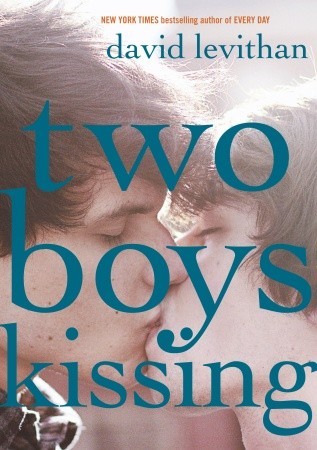
2. Two Boys Kissing by David Levithan
Rating: PG, 5 stars
Trigger warnings: AIDS, homophobia, suicide attempt

1. The Ocean at the End of the Lane by Neil Gaiman
Rating: PG, 5 stars
Trigger warnings: animal death, death, nightmares


Wednesday, January 29, 2014

LovelyReads Under Maintenance

Just a quick note: I'm going to start editing old reviews to make them match the new format, so if you wade back to years past, don't be surprised if things look a little funky or just plain different. This may take me a few weeks, especially with classes starting back up soon, but I'm determined to clean things up! Tallyho!

--LovelyReader

Sunday, January 26, 2014

Blue is the Warmest Color by Julie Maroh

Blue is the Warmest Color by Julie Maroh

Originally published in French as Le bleu est une couleur chaude, Blue is the Warmest Color is a graphic novel about growing up, falling in love, and coming out. Clementine is a junior in high school who seems average enough: she has friends, family, and the romantic attention of the boys in her school. When her openly gay best friend takes her out on the town, she wanders into a lesbian bar where she encounters Emma: a punkish, confident girl with blue hair. Their attraction is instant and electric, and Clementine find herself in a relationship that will test her friends, parents, and her own ideas about herself and her identity.

First published in French by Belgium's Glénat, the book has won several awards, including the Audience Prize at the Angoulême International Comics Festival, Europe's largest. The film Blue Is the Warmest Color won the Palme d'Or at the 2013 Cannes Film Festival.

Julie Maroh is an author and illustrator originally from northern France. (blurb from Goodreads)

Rating: R; 5 stars
Trigger warnings: homophobia, romantic age difference

This book was an absolute beauty, and I am so excited to hear that it’s a movie, too. Not to sound cliché, but it is incredibly French--it differs from American comic books and graphic novels in the same ways that French films differ from American films. In fact, I really want to read it in the original language, because I suspect I’d like it even more in French.

I was a little weirded out at first by the age difference between Clementine and Emma. Clementine is still in high school, and Emma is very clearly an adult. Once they actually had a relationship and weren’t just meeting in a bar, the weirdness factor did go down a bit, but I imagine the age difference between them could be uncomfortable and/or triggering for some readers. Just a word of warning.

The art is beautiful in this book, very detailed, but not overdone. In many places, the dialogue is sparse, allowing the story to continue solely through the artwork. This is one of the ways in which I feel it parallels French film.

Without giving anything away, this isn’t exactly a happy book. I wouldn’t recommend reading it if you’re already sad, because you’ll probably finish it in one sitting, and then you’ll be sadder.

Another word of warning: this book does contain a few sex scenes, and because it’s a graphic novel, they’re, well, graphic. That is pretty much the sole reason I rated Blue is the Warmest Color as R.

Maturity aside, this really is an excellent book. The story is emotionally engaging, the characters are complex, and the art is breathtaking. I wholeheartedly recommend it. As for myself, I will be watching the movie as soon as I can get ahold of it.

Sunday, December 8, 2013


Two Boys KissingTwo Boys Kissing by David Levithan


New York Times  bestselling author David Levithan tells the based-on-true-events story of Harry and Craig, two 17-year-olds who are about to take part in a 32-hour marathon of kissing to set a new Guinness World Record—all of which is narrated by a Greek Chorus of the generation of gay men lost to AIDS. 

While the two increasingly dehydrated and sleep-deprived boys are locking lips, they become a focal point in the lives of other teen boys dealing with languishing long-term relationships, coming out, navigating gender identity, and falling deeper into the digital rabbit hole of gay hookup sites—all while the kissing former couple tries to figure out their own feelings for each other. (blurb from Goodreads)

Rating: PG, 5 stars
Trigger warnings: homophobia, AIDS, suicide attempt

This book. Oh, I have all the feelings for this book. Let’s start with the fact that I read this entire book in one sitting. In about two and a half hours. And I cried almost the entire time. Seriously, I started crying within the first five pages, and although I cry a lot when I read, it’s usually at the end of the book, not at the beginning.

The book starts out with the “Greek Chorus” of men who were lost to AIDS, written in a poetic and immediately-evocative style. Because I’m me and once I’m interested in a book, I don’t go back and read the blurb when I actually start to read the book, I didn’t realize that this was a sort of framing narrative for the novel. Although I’d assumed the entire book would be written in that fashion, I wasn’t disappointed when it shifted focus onto specific, living characters. All in all, I thought the writing struck that balance between plot-driven and poetic, catching the attention of both readers who appreciated every individual word and readers who focus on the bigger picture.

There were times that I found myself frustrated by the overwhelming focus on gay men, an already-dominant demographic in LGBTQ literature. However, I felt like this book was very clearly the story of gay men, and so the lack of bisexual and lesbian characters did not feel as harmful as it could have been. Two Boys Kissing doesn’t market itself as queer YA but as gay YA. Others may disagree with me, but even though the lack of other queer identities was frustrating, I was ultimately ok with it.

*SPOILER* I think part of why I loved this book so much is because it kept seeming like it would be a sad book, but everything ended on a positive, hopeful note. It’s so important to have books with gay characters who face a lot of the same problems other gay teens face without those problems being sugar-coated. By ending the book on a hopeful note instead of a “happily-ever-after” note, it felt both realistic and positive. *END SPOILER*

All in all, this was an excellent book. The writing is good, the characters are sympathetic, and it is gripping enough to make me read it in one sitting.

Sunday, December 1, 2013

Bi: Notes for a Bisexual Revolution by Shiri Eisner


Bi: Notes for a Bisexual RevolutionBi: Notes for a Bisexual Revolution by Shiri Eisner

Depicted as duplicitous, traitorous, and promiscuous, bisexuality has long been suspected, marginalized, and rejected by both straight and gay communities alike.

Bi takes a long overdue, comprehensive look at bisexual politics—from the issues surrounding biphobia/monosexism, feminism, and transgenderism to the practice of labeling those who identify as bi as either "too bisexual” (promiscuous and incapable of fidelity) or "not bisexual enough” (not actively engaging romantically or sexually with people of at least two different genders). In this forward-thinking and eye-opening book, feminist bisexual and genderqueer activist Shiri Eisner takes readers on a journey through the many aspects of the meanings and politics of bisexuality, specifically highlighting how bisexuality can open up new and exciting ways of challenging social convention.

Informed by feminist, transgender, and queer theory, as well as politics and activism, Bi is a radical manifesto for a group that has been too frequently silenced, erased, and denied—and a starting point from which to launch a bisexual revolution. (blurb from Goodreads)

Rating: PG-13, 4 stars
Trigger warnings: see review

This book took me a long time to get through, but not because I didn’t like it. I found it absolutely fascinating. The problem was, with school and all, I often found it hard to focus while I was reading it. In those moments, I would call it fascinating, but dense. From the perspective I have now, from having finished it over Thanksgiving break, I recognize that it wasn’t so much that it was dense, but more that it was more similar to the books I was reading for classes than the books I read for fun. So it took me awhile, but that wasn’t a bad thing.

In a way, I’m glad it took me so long to finish this book, because that gave me plenty of time to process. When it comes to ideological stances, I find that I often either accept or reject the whole of the ideology almost immediately. Not so with this book. I found there were things I definitely agreed with, but there were also things that I definitely disagreed with, and there were even things that I was (and am) on the fence about. It wasn’t comfortable, but I’m glad about that. This isn’t supposed to be a comfortable book. It asks tough questions about what it means to be bisexual, and the answers are no more comfortable than the questions.

This book was incredibly user-friendly. Like many textbooks from my primary school days, it highlighted “vocabulary words” right in the text and defined them in a separate box on the same page. This is very handy for people who might not be familiar with feminist and queer jargon. Trigger warnings were placed before the sections of the book that were relevant, even down to the paragraph, and there were additional “warnings” placed at the end of the triggering sections. I absolutely loved this idea, and I wish more writers (or editors?) took this approach. The availability of trigger warnings within the text is why I didn’t include them above (mostly because I’m slightly lazy and didn’t want to look up specific trigger warnings, because many of them were very specific). All I can say is that Eisner covered her bases when it comes to potentially triggering passages.

One aspect of the book that I definitely have mixed feelings about is the type of parallels she draws between bisexuality and other social issues/oppressed groups. While Eisner always makes clear that true parallels really don’t exist, and that one oppressed group isn’t better/worse off than any other (because you can’t compare them like that), she does often compare the bisexual movement to other movements, and she often chooses movements that she has connections to or experience with, such as trans* movements and movements specific to Israel/Occupied Palestine. This is where the mixed feelings come in. It was often hard for me to make the connections, because she used movements that I really have no familiarity with. This frustrated me, but I also recognize that Eisner isn’t an American author, so it wouldn’t even make sense for her to solely use American social movements, not to mention the fact that movements besides mainstream American social movements deserve attention. I recognize that my frustration comes from a place of privilege, and part of me enjoyed learning about social movements that I really had no prior knowledge of. But I was also frustrated quite a bit. Hence my mixed feelings.

Overall, this book is an excellent, both for bisexuals and those who identify on the queer spectrum, but also for feminists and anyone who is open to learning about bisexual issues. Be prepared to be uncomfortable while reading, maybe even angry--but hopefully you’ll take that discomfort the way I did by appreciating how relevant it is to the discussion this book is starting.

Note: I received a free ebook copy for review, but I also purchased a copy when I was financially able to. 

Wednesday, October 16, 2013

If You Could Be Mine by Sara Farizan

If You Could be Mine by Sara Farizan

In this stunning debut, a young Iranian American writer pulls back the curtain on one of the most hidden corners of a much-talked-about culture.

Seventeen-year-old Sahar has been in love with her best friend, Nasrin, since they were six. They’ve shared stolen kisses and romantic promises. But Iran is a dangerous place for two girls in love—Sahar and Nasrin could be beaten, imprisoned, even executed if their relationship came to light.

So they carry on in secret—until Nasrin’s parents announce that they’ve arranged for her marriage. Nasrin tries to persuade Sahar that they can go on as they have been, only now with new comforts provided by the decent, well-to-do doctor Nasrin will marry. But Sahar dreams of loving Nasrin exclusively—and openly.

Then Sahar discovers what seems like the perfect solution. In Iran, homosexuality may be a crime, but to be a man trapped in a woman’s body is seen as nature’s mistake, and sex reassignment is legal and accessible. As a man, Sahar could be the one to marry Nasrin. Sahar will never be able to love the one she wants, in the body she wants to be loved in, without risking her life. Is saving her love worth sacrificing her true self? (blurb from Goodreads)

Rating: PG-13, 4 1/2 stars
Trigger warnings: homophobia, transphobia, body dysmorphia, child prostitution

This book actually frustrated me quite a bit, but only in the sense that I wanted to reach through the book and shake Sahar several times.  It was very difficult for me to understand how she could be so in love with Nasrin that she would “fake” being trans*, even to the point of undergoing surgery. This frustration wasn’t a bad thing, though. It was fascinating to follow Sahar’s journey, despite how uncomfortable it made me. I also appreciated the fact that the book told the story of a queer teen who isn’t living in White America, which is something that I think a lot of LGBTQ YA does.

This was a really different book for me to read compared with other LGBTQ YA because the culture is so different. It is a contemporary setting non-Western setting, which I think places it in a really unique position. If my memory serves me, this is the first book I’ve read that clearly checks both those boxes. The non-Western-set books I can think of are speculative, and while there is value in building a speculative world around queer culture, I think there’s a different sort of value to taking a contemporary non-Western (and more specifically, a non-American) culture and really delving into what that means for queer-identified characters.

I liked that the setting and overall concept allowed this book to escape so many tropes, not just of queer YA, but of YA fiction in general. This wasn’t a coming out story. From the very beginning, Sahar and the reader know that she is gay. So she isn’t coming to terms with her own sexuality, and the cultural restrictions mean that she can’t safely broach the topic with most of the people in her life. *SPOILER ALERT* I also enjoyed how the book sidestepped the overused YA trope of “protagonist ends up dating forever their first true love.” There are times when I enjoy the trope, but even then I recognize that it’s overused, and it’s so refreshing to see something different. *END SPOILER*

Overall, I just really enjoyed the book. It made me cry (big surprise), and I definitely can’t wait to read the author’s next book.

Sunday, September 22, 2013

Open Letter to Quiet Light by Francesca Lia Block

Open Letter to Quiet Light by Francesca Lia Block

Open Letter to Quiet Light will make readers feel as if they are peering at secret writings meant for the eyes of a lover alone, but these carefully crafted lines somehow transcend the personal to touch everyone who has experienced this kind of consuming, wrenching love.

In these fiercely passionate, devastatingly revealing, sometimes spiritual, and often painful poems, Francesca Lia Block describes in fiery detail the rise and demise of a year-long love affair. Her rich use of language infused with the power of sex and spirit finally paint a transcendent, almost mythic portrait of the way two wounded people—both searching for connection—find each other, collide, and eventually separate. The words seem to bleed onto the page and even the most graphic moments have a devotional quality filled with nuanced expression and unbridled intimacy. (Blurb from Goodreads)

Rating: R, 4 stars
Trigger warnings: Sexual content, miscarriage, cancer

So, as part of my honors thesis, my advisor and I have agreed that I’m to read one book of poetry per week. “Book” is to be defined at my discretion, since obviously I can’t read an entire anthology in a week. Most of these books I likely won’t review, because for whatever reason, I find it really difficult to review poetry. However, Francesca Lia Block is definitely an exception, because I love her work.

I didn’t really take a look at what this collection was about before I selected it. I already owned it, and had been meaning to read it, so it struck me as an obvious choice. I’m glad I picked it, for a variety of reasons. First, the book has a loose (very loose) narrative arc, and my thesis poems are (ideally) going to be based around a narrative. It was really interested to look at a collection of poems that was bound by a cohesive structure while not being as confining as a novel in verse. Something I’m struggling with in my own writing is the idea of balancing between poetry and narrative arc, and Open Letter to Quiet Light made me think about possibly loosening the arc of my collection until it is more implied than told, which is something that I think Block really excelled at in this collection. At all times, I was able to follow the developing relationship without feeling like I was bogged down by the connections between each poem.

At first the book surprised me with it’s sexual content, but I’m really not sure why--it’s not new to me that Block’s writing can be sexually charged, even her poetry (see my reviews of Nymph and Fairy Tales in Electri-City). If you’re already familiar with much of Block’s work (though admittedly more than Weetzie Bat), the sexual content won’t be much of a surprise. For those who are new to Francesca Lia Block, there’s sex, quite a bit of it, in fact.

My one complaint with the collection is that when writing about sex, some words just aren’t poetic, and in certain contexts, they even took me out of the poem a little bit. I’m not exactly sure what she could have done to prevent that besides being less direct, and I did like the directness--so often erotic poetry is wrapped up in innuendo and subtext, and sometimes it’s nice to have everything out in the open. Still, those moments did pull me out of the poetry a little bit.

Un-poetic wording aside, however, I did enjoy this collection. I found myself underlining a lot of particularly enchanting lines or phrases, which is always a sign of love with me and poetry. For fans of Francesca Lia Block, this collection is a must-read.

PS--Sorry for the lack of an update on Wednesday. I’m considering cutting back to one post a week, but hopefully I’ll get a backlog of reviews ready to go soon.